


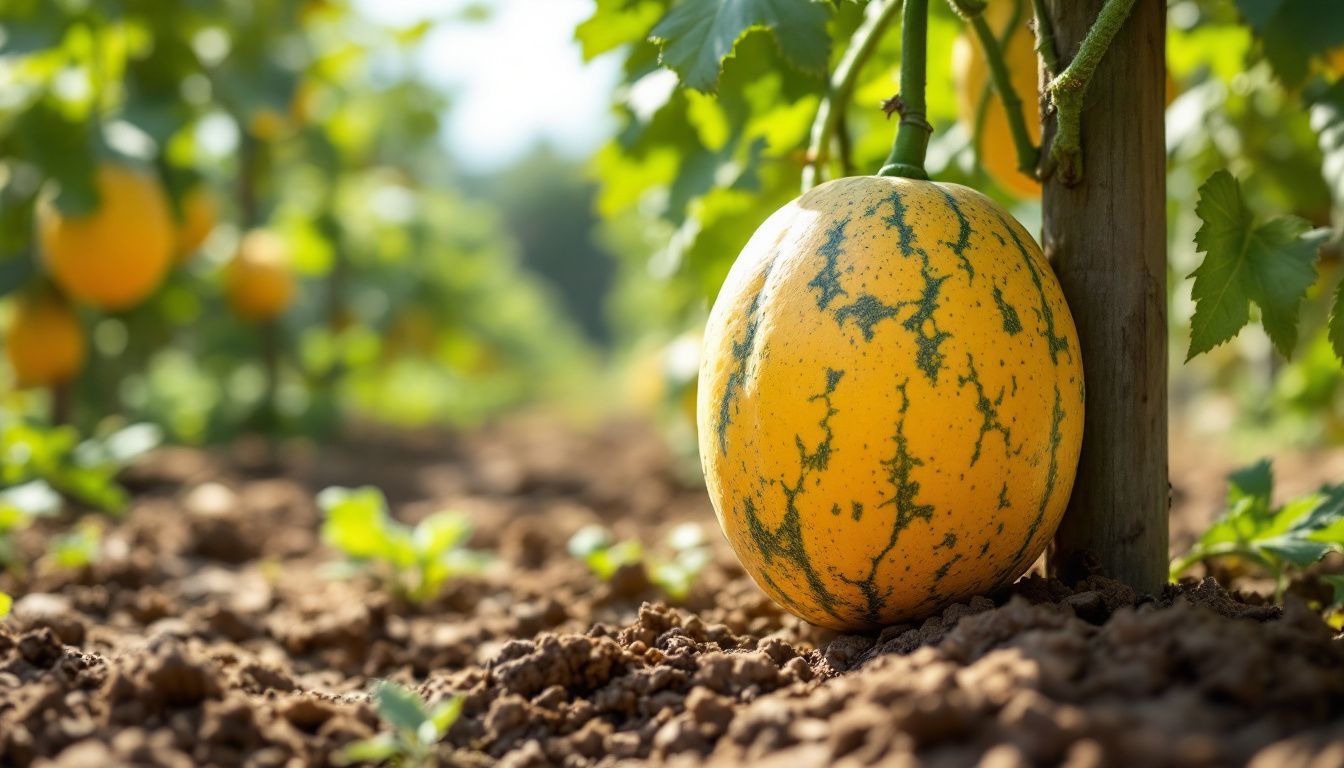
Growing cantaloupe can be tricky. These sweet melons need warm soil and lots of sun. This guide will teach you how to grow cantaloupe in your garden. You’ll learn tips for planting, care, and harvest.
Key Takeaways
- Cantaloupes need warm soil, full sun, and rich, well-drained soil to grow well.
- Plant seeds 1 inch deep and 18 inches apart, giving vines room to spread.
- Water deeply once a week, giving 1-2 inches of water each time.
- Use mulch to keep soil moist and warm, and feed plants with liquid fertilizer every 2 weeks.
- Look for yellow-buff color, strong smell, and easy separation from the vine to know when melons are ripe.
Preparing the Soil for Cantaloupe
Good soil is key for tasty cantaloupes. Mix in compost to boost nutrients and help water drain well.
Soil enrichment with organic matter
Rich soil makes happy cantaloupes. Mix compost or old manure into your garden bed. This adds nutrients and helps the soil hold water. Aim for about 2 inches of organic matter per 100 square feet.
Work it in well with a garden fork or tiller.
Good soil drainage is key for melon roots. Add sand if your soil is heavy clay. Organic matter also improves drainage over time. Test your soil pH – cantaloupes like it between 6.0 and 6.8.
Add lime to raise pH or sulfur to lower it if needed.
Ensuring proper drainage
Good drainage is key for healthy cantaloupes. Soggy soil can rot roots and kill plants. To fix this, mix in sand or compost. These loosen the dirt and let water flow. Also, plant on raised mounds or beds.
This lifts roots above wet ground. For extra help, add a layer of mulch around plants. It keeps the soil moist but not soaked.
Slope matters too. Make sure your garden tilts slightly. This helps water run off instead of pooling. If needed, dig small trenches between rows. They guide excess water away from plants.
With these steps, your cantaloupe vines will have happy, dry feet.
The Role of Organic Fertilizers in Soil Preparation
Organic fertilizers play a key role in prepping soil for cantaloupe. Compost and well-rotted manure are top choices. These natural boosters add vital nutrients to the earth. They also improve soil structure, helping roots grow strong.
Using organic matter makes the soil rich and loose. This lets water and air move freely. Cantaloupes love this kind of soil. It helps them grow big and sweet. Plus, organic fertilizers release nutrients slowly, feeding plants all season long.
Planting Cantaloupe
Plant cantaloupe seeds 1 inch deep and 18 inches apart. Give them full sun and rich soil for the best growth.
Spacing and depth for seeds and seedlings
Space cantaloupe seeds 36 to 42 inches apart. This gives vines room to spread. Plant seeds 1 inch deep in warm soil. For seedlings, dig holes 2 inches deep. Water well after planting.
Thin seedlings to one plant per spot when they grow 2-3 inches tall. Mulch around plants to keep soil moist. Add compost to boost nutrients. Cantaloupes need lots of sun and heat to grow sweet fruit.
Optimal sunlight exposure
Cantaloupe plants love the sun. They need at least 6 hours of direct sunlight each day to grow well. Full sun helps the vines produce sweet, juicy melons. Pick a spot in your garden that gets lots of light from morning to evening.
Avoid shady areas or places near tall trees or buildings.
Good sunlight also helps keep the soil warm. Warm soil is key for healthy cantaloupe growth. The plants will grow faster and produce more fruit in sunny spots. If your garden doesn’t get enough sun, try using reflective mulch to boost light levels.
Next, let’s look at how to care for your cantaloupe plants as they grow.
Care and Maintenance of Cantaloupe Plants
Caring for cantaloupe plants is key to a good harvest. Water them deeply once a week, and use mulch to keep the soil moist and warm.
Watering techniques
Water cantaloupe plants deeply once a week. Give them 1-2 inches of water each time. Use drip irrigation or soaker hoses to keep leaves dry. This stops diseases. Water early in the day so plants can dry before night.
Mulch around plants with straw to hold moisture in the soil. Check soil moisture often – stick your finger 2 inches deep. If it’s dry, water right away.
Mulching and fertilization practices
Mulch keeps weeds away and holds water in the soil. Spread a 2-inch layer of straw or grass clippings around your cantaloupe plants. This helps the roots stay cool and moist. For fertilizer, mix compost into the soil before planting.
Then, feed your melons with a balanced liquid fertilizer every 2 weeks. This gives them the nutrients they need to grow big and sweet. Proper care of the soil helps your cantaloupe thrive.
Next, let’s look at how to protect your plants from pests and diseases.
Understanding Water-Soluble and Liquid Fertilizers for Cantaloupe
Water-soluble fertilizers work great for cantaloupes анд dissolves easily in water. This lets the plants soak up nutrients fast through their roots and leaves.
You can apply it every 1-2 weeks during the growing season.
Liquid fertilizers also feed cantaloupe plants well. They come pre-mixed and ready to use. Just pour them around the base of the plants. Both types give a steady supply of food to help cantaloupes grow big and sweet.
Next, let’s look at how to protect your melons from pests and diseases.
Protecting Cantaloupe from Pests and Diseases
Melon aphids and cucumber beetles love to munch on cantaloupe plants. These pests can spread quickly and damage your crop. To stop them, use insecticidal soap or neem oil. These natural options work well and won’t harm helpful bugs.
Fungus diseases also threaten cantaloupes. Watch out for leaf spots, stem blight, and mildew. Good air flow between plants helps prevent these issues. Pick Ambrosia cantaloupe if you can – it fights off powdery mildew better than other types.
Next, let’s look at how to tell when your melons are ripe and ready to pick.
Harvesting Cantaloupe
Picking ripe cantaloupes is key to enjoying their sweet taste. Look for a tan or yellow color and a strong, sweet smell at the stem end.
Signs of ripeness
Ripe cantaloupes show clear signs. The rind turns yellow-buff and develops a strong net-like pattern. A sweet, musky smell comes from the fruit. These changes signal it’s time to pick.
Look for a slight give when you press the blossom end. The stem may start to crack where it meets the fruit. Ripe melons often feel heavy for their size. Check daily as harvest time nears.
Pick fruits that separate easily from the vine with a gentle tug.
Proper harvesting technique
To pick ripe cantaloupes, gently lift them. They should come off the vine easily. Look for a yellow bottom and brown stem. These signs show the melon is ready. Cut the stem with clean shears, leaving a short stub.
Handle the fruit with care to avoid bruising. Proper picking ensures the best flavor and longest shelf life.
Storing your harvest matters too. Keep ripe melons in a cool, dry place. They’ll last about a week on the counter. For longer storage, put them in the fridge. Next, let’s look at how to choose the right type of fertilizer for your cantaloupe plants.
The Importance of Choosing the Right Fertilizer for Cantaloupe Growth
Picking the right fertilizer boosts cantaloupe growth. Grow Plant Gel 30-30-30 gives key nutrients. It helps melons grow big and tasty. Organic options like compost or aged manure improve soil health.
These natural choices feed plants slowly over time. They also make soil drain better. Good soil lets roots spread out and grab more food. This leads to stronger vines and more fruit.
Using the right mix of foods helps cantaloupes fight off pests and diseases too. Healthy plants can focus on making sweet, juicy melons for your garden.
Conclusion
Growing cantaloupe is fun and rewarding. With the right soil, sun, and care, you’ll enjoy sweet melons in no time. Follow these tips to grow healthy vines and tasty fruit. Be sure to water well and watch for pests.
Soon, you’ll be picking ripe cantaloupes from your own garden!

