


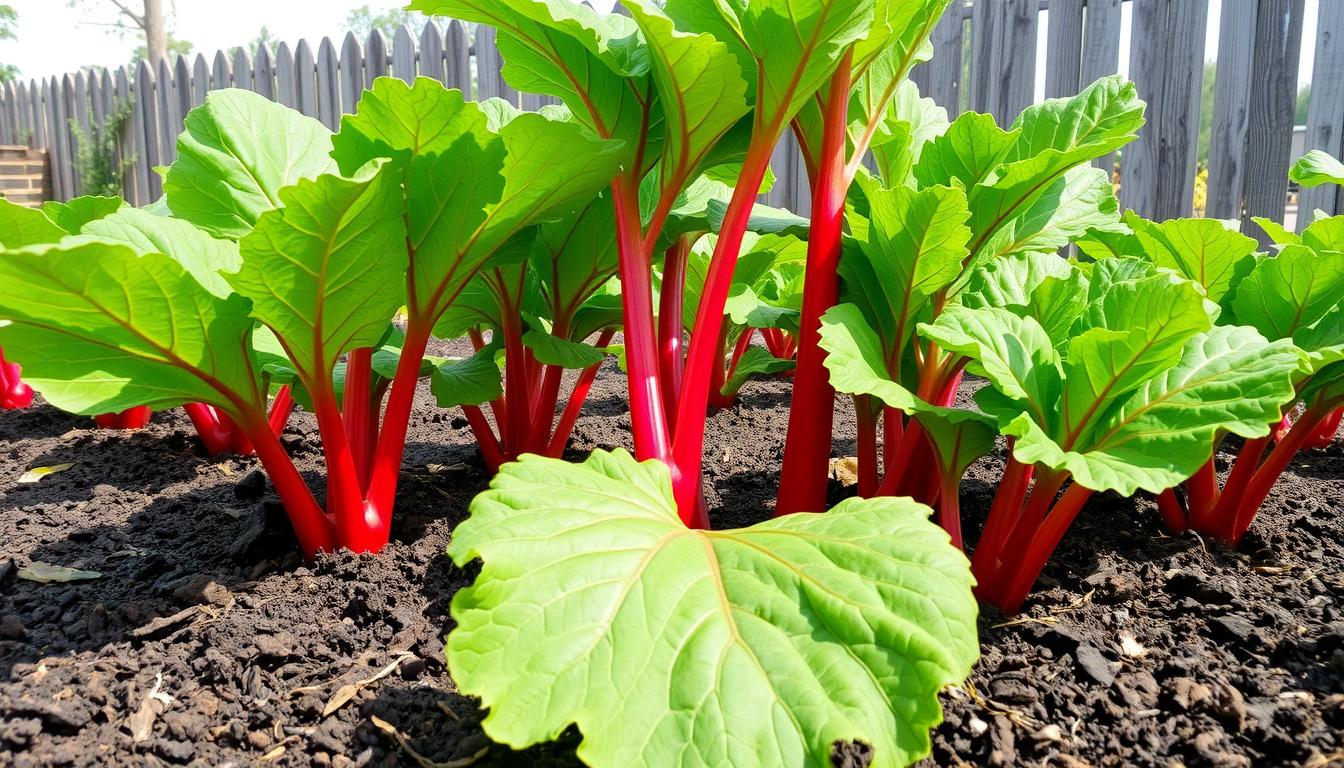
If you want to add a burst of tangy flavor and color to your garden, rhubarb is a great choice. This perennial vegetable is known for its tasty stalks. They are perfect for both sweet and savory dishes. This guide will help you grow rhubarb in your backyard, whether you’re new or experienced.
Key Takeaways
- Rhubarb is a perennial vegetable that can produce harvests for 5-8 years or longer
- It thrives in cool climates and requires an extended chilling period for optimal stem production
- Rhubarb is versatile, used in pies, jams, and savory dishes, offering both culinary value and sculptural beauty
- Proper site selection, soil preparation, and planting methods are crucial for successful rhubarb cultivation
- Ongoing care and maintenance, including fertilization, harvesting, and pest management, are essential for a bountiful rhubarb harvest
Understanding Rhubarb Basics
Rhubarb is a cool-season crop that has been loved for centuries. It grows best in zones where it freezes in winter, zones 3 to 8. The plant has big leaves and colorful stems, from green to deep red.
What is Rhubarb?
Rhubarb belongs to the Polygonaceae family, like buckwheat. The leaves are not safe to eat because of oxalic acid. But the stalks are tasty and good to eat. Rhubarb plants can get really big, up to 4 feet wide and tall.
Benefits of Growing Rhubarb
- Rhubarb needs little water, just one soaking a week.
- It’s a perennial, living over 50 years and giving lots of food.
- The tart flavor of rhubarb is great with sweet things, like in pies and jams.
- Rhubarb is full of vitamins and minerals, like vitamin K, C, and manganese.
Climate and Growing Zones
Rhubarb loves cool, temperate weather and grows best in zones 3 to 8. It needs cold, below 40°F, to grow well. In warmer places, it may not do as well because it likes cooler, moist soil.
Best Rhubarb Varieties for Your Garden
Choosing the right rhubarb variety can greatly affect your garden’s taste and look. Let’s look at some top rhubarb varieties for your garden:
‘Victoria’ is a classic green-stalked variety that turns red as it matures. It offers a reliable and well-rounded flavor. Crimson Cherry‘ has vibrant red stalks with a slightly sweeter taste. ‘Canada Red’ is known for its deep red hues and excellent flavor.
Raspberry Red’ is a unique cultivar that combines the tartness of rhubarb with a hint of raspberry flavor. Other popular red-stalked options include ‘MacDonald’ and ‘Valentine’. Both are dependable choices.
For gardeners seeking a green-stalked variety, the ‘Victoria’ cultivar is a go-to pick. It’s a consistent performer and a great all-around rhubarb plant.
| Rhubarb Variety | Stalk Color | Flavor Profile | Ideal Growing Zones |
|---|---|---|---|
| Victoria | Green to Red | Well-balanced | Zones 3-8 |
| Crimson Cherry | Vibrant Red | Slightly Sweet | Zones 3-8 |
| Canada Red | Deep Red | Excellent Flavor | Zones 3-8 |
| Raspberry Red | Bright Red | Hint of Raspberry | Zones 3-8 |
With so many fantastic rhubarb varieties to choose from, you’re sure to find the perfect fit for your garden and culinary needs. Happy rhubarb growing!
How to Grow Rhubarb: Step-by-Step Guide
Want to add rhubarb’s tart flavor to your garden? You’re in the right spot. Growing rhubarb is rewarding. With the right tips, you’ll enjoy a big harvest for years.
Site Selection and Soil Preparation
Rhubarb loves well-draining, fertile soil. It needs full sun to partial shade. Pick a spot with at least 6 hours of direct sunlight.
To get your soil ready, mix in compost or well-rotted manure. Do this to a depth of 8-12 inches. This gives your rhubarb the nutrients it needs.
Planting Time and Methods
Plant rhubarb in early spring or late fall. When the soil is ready, or after it’s dormant. Plant the crowns 4 inches deep, 2 to 4 feet apart.
If starting with seeds, sow them 2.5 cm deep. Thin the seedlings to 15 cm apart.
Spacing Requirements
Rhubarb needs lots of space to grow. Plant them 75-90 cm apart. Make sure there’s 3-4 feet between rows for easy care.
Water your rhubarb well after planting. Keep the soil moist during the growing season. With the right site and care, you’ll enjoy homegrown rhubarb soon. As your rhubarb matures, be sure to mulch around the plant to retain moisture and suppress weeds. Regular watering and occasional feeding with compost will promote healthy, vigorous growth. Just like tending to rhubarb, growing rambutan at home requires attention to moisture, sunlight, and temperature to ensure a fruitful harvest.
Essential Care and Maintenance Tips
Caring for rhubarb plants is easy. But, following key tips ensures a good harvest and healthy plants. Here are the main steps to keep your rhubarb plants in top shape:
- Mulching: Put a 2-inch layer of organic mulch, like wood chips or shredded leaves, around your rhubarb plants. It keeps the soil moist, stops weeds, and keeps the temperature right.
- Flower Stalk Removal: When flower stalks show up, take them off right away. This helps your rhubarb stalks grow bigger and taste better.
- Fall Cleanup: After the first frost in fall, clean up all plant debris. Then, put a 2 to 4-inch layer of compost or leaves over the crowns to protect them.
- Plant Division: Every 5 to 10 years, split your rhubarb plants when they get too crowded. This makes them grow strong and keep producing.
- Harvesting: Don’t pick rhubarb in the first year. In the second year, pick a little, then more as the plants get bigger.
By using these rhubarb care tips and rhubarb growing guide, your rhubarb plants will do great. You’ll get lots of this tasty and useful crop.
| Maintenance Tip | Frequency | Benefit |
|---|---|---|
| Mulching | Annually | Retains moisture, suppresses weeds, regulates soil temperature |
| Flower Stalk Removal | As needed | Redirects plant energy to stalk production |
| Fall Cleanup | Annually | Protects crowns during winter |
| Plant Division | Every 5-10 years | Rejuvenates plants, promotes growth and productivity |
| Harvesting | Gradually increase after second year | Allows plants to establish and thrive |
Fertilizing and Soil Amendment Guide
Rhubarb plants grow well with regular fertilizing. This helps them grow strong and healthy. Knowing the best fertilizers and when to use them is key.
Organic Fertilizer Options
For rhubarb, organic fertilizers are the top choice. Use a balanced organic fertilizer or compost in early spring. This adds nutrients and makes the soil better for water and air.
Timing of Applications
Rhubarb needs two fertilizers a year. One in spring and one in fall. Spring fertilizer helps them grow fast. Fall fertilizer prepares them for winter.
Soil pH Requirements
Rhubarb likes slightly acidic soil, best between 6.0 and 6.8. If your soil is too far off, add lime or sulfur. The right pH helps them get nutrients better.
By following these tips, your rhubarb will grow well. They’ll give you plenty of food every year.
Harvesting and Storage Methods
Growing rhubarb is rewarding, but you need to harvest and store it right. This way, you can enjoy its tart taste all season. Let’s look at the best ways to rhubarb harvesting and storage for a great harvest.
Start harvesting when your rhubarb stalks are 10-15 inches long. This is usually from mid-April to late June. Pull the stalks up and twist them to break them from the crown. Or, you can cut them with a sharp knife.
Don’t eat the leaves, as they are toxic. Only eat the rhubarb stalks. Store the stalks in plastic bags or containers in the fridge for up to two weeks. You can also freeze chopped rhubarb for up to a year.
Stop harvesting when the stalks get thin and small. This is usually after 8-10 weeks. Letting the plant rest will help it grow more next year.
| Storage Method | Shelf Life |
|---|---|
| Refrigerator | Up to 2 weeks |
| Freezer | Up to 1 year |
| Freeze-dried | Up to 25 years |
By following these rhubarb harvesting and storage tips, you can enjoy rhubarb in your recipes all season and beyond.
Common Rhubarb Problems and Solutions
I’ve faced many rhubarb issues over the years. But don’t worry, I’ve got some rhubarb care tips to help. Let’s tackle the most common rhubarb problems together.
Crown Rot
Crown rot is a big worry for rhubarb growers. It’s caused by fungi like Phytophthora and Fusarium. Spotting symptoms early is key. Make sure your soil drains well and use healthy plants to prevent it.
Leaf Spot
Leaf spot is another fungal disease that hits rhubarb plants. Look for brown or black spots with yellow halos. To fight it, keep plants spaced right, water wisely, and clean up debris. If it doesn’t go away, try planting resistant varieties.
Flowering and Crown Division
Rhubarb plants may flower if stressed or fed too much nitrogen. Thin, weak stems might need division every 5-6 years. Don’t pick rhubarb too late in July to help the crown for next year.
Environmental Factors
Weather can affect rhubarb growth. Hot and dry can make it bitter, while wet and hot can cause stalks to split. Use mulch, water right, and harvest carefully to manage these issues.
By watching out and using the right rhubarb care tips, you can beat these common rhubarb gardening problems. Enjoy a rich harvest of this tasty and versatile crop.
| Problem | Symptoms | Causes | Solutions |
|---|---|---|---|
| Crown Rot | Mushy, discolored crowns with foul odor and stunted growth | Fungi like Phytophthora and Fusarium | Ensure well-drained soil, use healthy plants, and implement good planting techniques |
| Leaf Spot | Brown or black spots with yellow halos, lesions, yellowing leaves, and defoliation | Fungal disease favored by high humidity and poor air circulation | Maintain proper spacing, improve watering techniques, and remove plant debris |
| Flowering and Crown Division | Thin, weak stems; crowns may need division every 5-6 years | Stressed plants or excess nitrogen | Avoid harvesting after the third week of July; divide crowns in winter for healthier growth |
| Environmental Factors | Bitterness, stalk splitting | Hot and dry conditions, fluctuating wet and hot seasons | Implement proper mulching, watering, and harvesting techniques |
Companion Planting and Garden Integration
Rhubarb is a versatile plant that fits well in your garden. Its large, striking leaves add height and structure. Plant it near your compost pile for nutrient-rich soil.
Best Companion Plants
Choose plants wisely to avoid pests. Avoid planting rhubarb near sunflowers, thistles, or dock. These attract the rhubarb curculio.
Garden Layout Strategies
Plan for 2 to 4 feet between plants and 3 to 4 feet between rows. This prevents overcrowding and ensures air circulation.
Spacing Considerations
Good spacing is key for healthy rhubarb plants. It helps them grow strong roots and avoids disease and pests.
Adding rhubarb to your garden is rewarding. It brings visual interest and fresh produce. With the right plants and spacing, your rhubarb patch will thrive.
Conclusion
Growing rhubarb is a long-term, easy way to add to your garden. It gives you lots of harvests for years. By following the right how to grow rhubarb steps, you can enjoy its tart taste and many uses.
Make sure to harvest it right, letting the plants grow strong first. Then, you can use it in many tasty dishes.
Rhubarb is not just good for your garden; it’s also full of nutrients. It grows well in the right spot, giving you tasty stalks for pies, jams, and more. With a bit of care, your rhubarb will keep giving you fresh food for years.
Adding rhubarb to your garden is fun and rewarding, no matter if you’re new or experienced. Learning how to grow rhubarb makes your garden more beautiful and fruitful. Start this journey and enjoy the benefits of growing this hardy and versatile plant.

