


As a passionate gardener, I know finding the best fertilizer for banana plants is key. Banana plants need a mix of nitrogen, phosphorus, and potassium (NPK) to grow well. I’ll share tips on nutrients, feeding times, and how to apply them. This will help you grow lush, fruitful banana plants, even in cooler places.
Key Takeaways
- Banana plants need a balanced NPK fertilizer for optimal growth and fruit production.
- Proper fertilization techniques can help home gardeners successfully grow banana plants in non-tropical regions.
- Nitrogen is the primary nutrient required for leafy growth, while phosphorus and potassium support root development and overall plant health.
- Fertilizer should be applied based on the plant’s growth stage, with young plants requiring monthly feedings and mature plants needing biweekly or monthly applications.
- Organic and inorganic fertilizer options offer different benefits, and the right choice depends on the gardener’s preferences and the plant’s needs.
Understanding Banana Plant Nutrition Basics
Banana plants need a mix of macronutrients and micronutrients to grow well. The NPK ratio is key. It stands for Nitrogen (N), Phosphorus (P), and Potassium (K).
Essential Macronutrients for Bananas
Nitrogen helps leaves grow green and big. But too much can make bunches smaller. Phosphorus is important for strong roots and flowers. Potassium helps shoots grow fast and fruit ripen well.
Secondary Nutrients and Micronutrients
- Magnesium helps prevent yellow leaves and damage on older leaves.
- Calcium is needed for good fruit and to prevent splitting.
- Sulphur helps with growth and keeps nitrogen levels right.
- Boron is key for big bunches and healthy leaves.
- Iron stops young leaves from turning yellow and helps with iron sulfate.
- Zinc keeps young leaves healthy and prevents crown damage.
Role of NPK in Banana Growth
The NPK ratio is vital for banana plants. It affects growth and fruit quality. Finding the right balance is crucial for a healthy plant.
Why Bananas Need Regular Fertilization

Banana plants need lots of nutrients to grow fast and produce lots of fruit. They need regular food to stay healthy. Without it, they might not grow well or produce much fruit.
Bananas need a mix of nutrients like nitrogen, phosphorus, and potassium. Fertilizing banana plants right is key for them to do their best.
- Recommended NPK ratios for banana fertilizers include 8-10-10, 10-8-10, and 15-15-15.
- A young dwarf banana plant needs about 250 grams of fertilizer a month. A big plant might need up to 700 grams.
- In spring and summer, feed banana plants once or twice a month. Don’t fertilize in autumn and winter.
Regular fertilization helps banana plants grow strong and produce lots of fruit. Keeping them well-fed is important for their health and fruit.
Best Fertilizer for Banana: Complete Guide
Choosing the right fertilizer is key for banana plants to grow well and produce lots of fruit. Look for fertilizers with a balanced NPK ratio, like 8-10-10, 10-8-10, or 15-15-15.
Balanced NPK Fertilizers
Bananas need lots of nutrients to grow big and strong. A balanced NPK fertilizer gives them the right mix of nutrients. This helps with leaf growth, root health, and fruit production.
Potassium is especially important for bananas. It makes up more than 60% of what they need.
Organic vs. Inorganic Options
Organic and inorganic fertilizers both work well for bananas. Organic fertilizers like compost and manure release nutrients slowly. They help keep the soil healthy and support long-term growth.
Inorganic fertilizers give a quick nutrient boost. They’re great for fast results.
Seasonal Fertilizer Requirements
Banana plants need different nutrients at different times. In spring and summer, they need more nitrogen for leaf growth.
When they start to flower and fruit, they need more potassium. This helps improve fruit quality and quantity. Applying nutrients through leaves is best during these stages.
Knowing what your banana plants need and choosing the right fertilizer will help them grow well. This way, you’ll get a big harvest every year.
Optimal NPK Ratios for Banana Plants
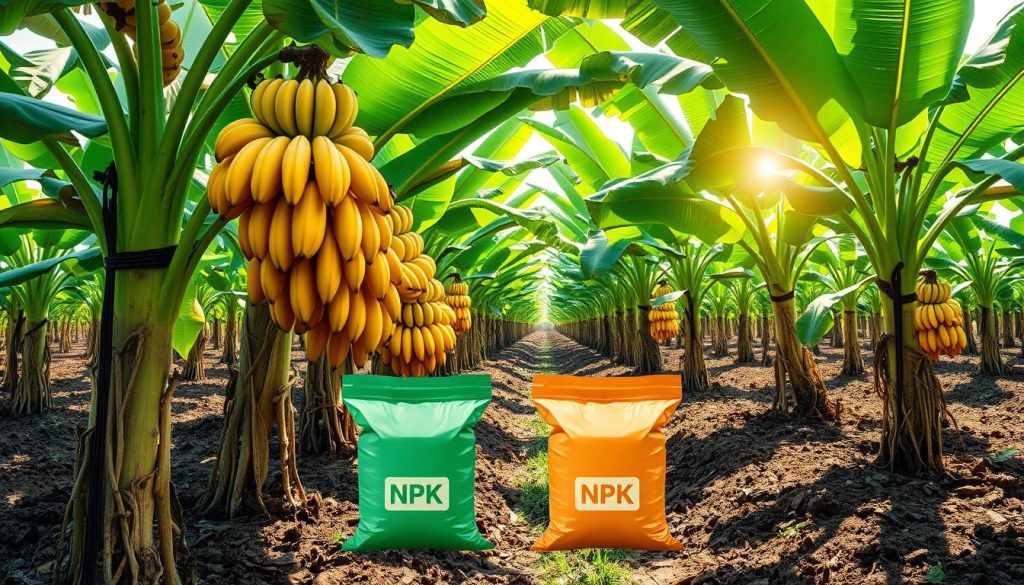
Banana plants need nitrogen, phosphorus, and potassium to grow well. The best mix of these nutrients changes with the plant’s growth stage and environment. A good mix is usually 8-10-10 or 10-8-10.
In the growing season, banana plants do well with more nitrogen. A 20-20-20 formula helps them grow strong and green. When they start to flower and fruit, a fertilizer rich in potassium (like 10-8-20) is better. It helps the fruit grow well and taste great.
It’s important to test your soil to find the right NPK mix for your banana plants. The best mix depends on your soil, climate, and how old the plants are. With the right mix, your banana plants will grow strong and give lots of good fruit.
| Growth Stage | Recommended NPK Ratio |
|---|---|
| Growing Season | 20-20-20 |
| Flowering/Fruiting | 10-8-20 |
| Balanced | 8-10-10, 10-8-10 |
While these NPK ratios are a good starting point, keep a close eye on your banana plants. Adjust the fertilizer as needed to meet their specific needs and your local growing conditions.
Timing Your Fertilizer Application
Getting the timing right for fertilizer is key for your banana plants’ health. In spring and summer, when they grow fast, feed them every 2 to 4 weeks. The amount depends on how big and mature your plants are. For big plants, use up to 1.5 pounds of 8-10-10 fertilizer a month.
Spring and Summer Feeding Schedule
When it gets warmer and your banana plants start growing, it’s time to fertilize regularly. Here’s what to do for spring and summer:
- Use a balanced 8-10-10 fertilizer every 2-4 weeks.
- As your plant gets bigger, you can use more fertilizer, up to 1.5 pounds a month for big plants.
- Watch how your plant does and change the schedule if needed, based on your area and plant type.
- If your banana plants are in pots, they might need more fertilizer, so check their nutrients often.
Winter Fertilization Guidelines
In the fall and winter, when it’s cooler and plants grow slower, you should not fertilize as much. This break helps them get ready for next year’s growth. Here’s what to do in winter:
- In the autumn, when growth slows, cut back or stop fertilizing.
- In winter, only give a little fertilizer, if any, to keep nutrients up.
- Look at how your plant looks and change the fertilizer schedule if it needs it.
The best fertilizer application timing and banana plant feeding schedule can change based on where you live and the banana type. Watch your plants closely and adjust the schedule as needed to keep them healthy and growing well.
How to Apply Fertilizer to Banana Plants
Fertilizing banana plants right is key for their growth and fruit. As a banana fan, I’ve found the best ways to fertilize. This helps these tropical plants grow well.
First, use a balanced NPK fertilizer made for banana plants. These nutrients help the plant grow strong and produce good fruit. The best NPK ratio is usually 8-10-10 or 10-10-10.
- Spread the fertilizer around the plant’s base, to where the leaves drip. This makes sure all roots get the nutrients.
- For granular fertilizers, mix it into the soil gently. Don’t hurt the roots. Then, water well to soak up the nutrients.
- Liquid fertilizers can be mixed with water and watered on the plant. This gives a quick nutrient boost.
- Foliar feeding, spraying fertilizer on leaves, is also good. It helps the plant take in nutrients fast.
Always follow the fertilizer’s instructions for how much and how often. Too much fertilizer can harm the plant. Banana plants usually need fertilizing every two weeks from spring to fall. In cooler places, once a month is enough.
| Fertilizer Type | Application Method | Frequency |
|---|---|---|
| Granular | Work into soil around base | Every 2 weeks (spring-fall) Monthly (cooler climates) |
| Liquid | Mix with water, apply during irrigation | Every 2 weeks (spring-fall) Monthly (cooler climates) |
| Foliar | Spray directly onto leaves | Every 2 weeks (spring-fall) Monthly (cooler climates) |
By using these banana fertilizer application methods, your plants will get the nutrients they need. This will help them grow well and give you lots of fruit. Happy fertilizing banana plants!
Organic Fertilizer Options for Bananas
If you love growing banana plants, you know they need the right food to grow well. Organic fertilizers are better than synthetic ones because they help plants grow strong over time. Let’s look at some top organic fertilizers for your banana plants.
Compost and Manure
Compost is a top choice for banana plants. It’s full of nutrients that plants need slowly. It also makes the soil better for plants to grow in.
Well-rotted manure is another great choice. It has nutrients and organic matter that plants love.
Natural Amendments
You can also use natural amendments to help your banana plants. Bone meal is full of phosphorus. Wood ash has potassium. These help make your soil just right for your plants.
Organic fertilizers need to be applied more often than synthetic ones. But they release nutrients slowly and don’t harm plants. They also help good bugs in the soil, making plants healthier. With a bit of planning, you can have a green, healthy garden using these organic fertilizers.
| Organic Fertilizer | Nutrient Profile | Benefits |
|---|---|---|
| Compost | Balanced NPK, micronutrients | Improves soil structure, provides slow-release nutrients |
| Well-rotted Manure | Balanced NPK, organic matter | Enhances soil fertility, promotes beneficial microorganisms |
| Bone Meal | High in Phosphorus (P) | Supports root growth and fruit development |
| Wood Ash | High in Potassium (K) | Provides essential nutrient for strong plant growth |
Chemical Fertilizers and Their Benefits
As a banana grower, I’ve learned the good points of chemical fertilizers. They give my plants the right mix of nutrients fast. This helps my banana plants grow well and strong.
Chemical fertilizers come in many types, including slow-release ones. This lets me pick the best one for my bananas. They give my plants a quick boost for growth and fruit.
I like using chemical fertilizers because they’re easy to use and work well. They help my bananas get the nutrients they need. But, I always follow the right amount to keep my plants healthy and the environment safe.