


I love growing tropical fruits like pineapples. These pineapple plants are beautiful and tasty. But, to grow them well, knowing how to fertilize is important.
In this guide, I’ll tell you about the best fertilizer for pineapple. You’ll learn about the nutrients it needs, how to apply it, and what to do if problems arise. This will help you grow pineapples in your backyard.
Key Takeaways
- Pineapple plants thrive in slightly acidic soil with a pH range of 4.5 to 5.5.
- A balanced NPK fertilizer is essential for pineapple growth and fruit production.
- Both organic and inorganic fertilizers can be beneficial, offering unique advantages.
- Proper fertilization techniques, including foliar feeding and slow-release methods, can significantly impact plant health and fruit quality.
- Adjusting fertilization based on plant response is crucial to avoid over-fertilization and nutrient imbalances.
Understanding Pineapple Plant Nutrition Basics
Pineapple plants need specific nutrients to grow well. They need a mix of important nutrients to thrive. Knowing what these nutrients are helps growers give their plants what they need for a good harvest.
Essential Nutrients for Healthy Growth
Pineapple plants need different nutrients for growth. Nitrogen, phosphorus, and potassium are key. Nitrogen helps leaves grow, phosphorus supports roots and flowers, and potassium improves fruit and health.
Role of Macronutrients in Pineapple Development
Nitrogen, phosphorus, and potassium are vital for pineapples. Nitrogen makes leaves big and healthy. Phosphorus helps roots and flowers grow, leading to more fruit. Potassium boosts health and fruit quality.
Impact of Micronutrients on Plant Health
Pineapple plants also need micronutrients like iron, zinc, and manganese. These trace elements are important for photosynthesis and nutrient uptake. They help prevent deficiencies and keep plants healthy.
Best Fertilizer for Pineapple: Types and Applications
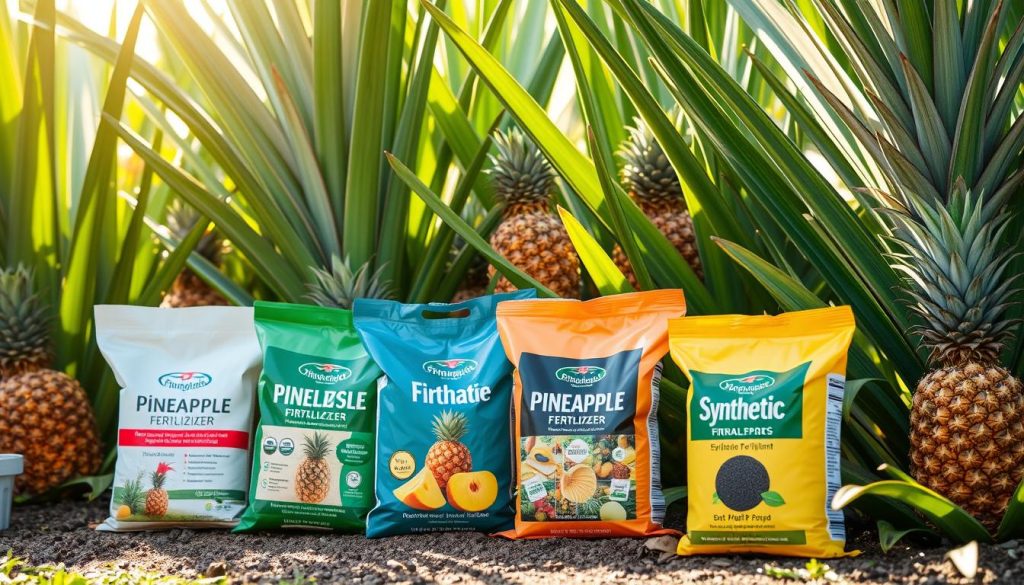
To grow perfect pineapples, you need the right nutrients. Many fertilizers are great for pineapples. Balanced NPK formulas like 6-6-6 or 10-10-10 are perfect. They have nitrogen, phosphorus, and potassium for healthy growth.
Organic fertilizers like compost, coffee grounds, and eggshells are also good. They give slow nutrients that help plants grow over time. These options make the soil better and make plants strong.
Inorganic fertilizers give quick nutrients. They are good for fast growth or fixing specific problems. Foliar feeding and slow-release formulas are also great for pineapples. The best fertilizer depends on the soil, plant growth, and nutrient needs. Soil tests help find the best fertilizer.
Knowing about different fertilizers helps pineapple growers. They can give their plants the right nutrients. With the right best fertilizer for pineapple, gardeners can get a big, tasty harvest.
Organic vs. Synthetic Fertilizer Options
Gardeners and farmers have to choose between organic and synthetic fertilizers for pineapples. Each has its own benefits and things to think about. Knowing the good and bad of each helps you decide what’s best for your pineapples.
Benefits of Natural Fertilizers
Organic fertilizers like compost and manure are great for pineapples. They make the soil better, help good bugs, and give nutrients slowly. This keeps the soil healthy and helps your pineapples grow well.
Advantages of Chemical Fertilizers
Synthetic fertilizers give nutrients quickly and in the right amounts. They’re easy to use and match your pineapples’ needs at every stage. This helps them grow and produce fruit well.
Choosing the Right Option for Your Garden
Choosing between organic and synthetic fertilizers depends on your soil and pineapples’ needs. Mixing both can give your pineapples the best nutrition. This ensures they grow well and produce great fruit.
| Organic Fertilizers | Synthetic Fertilizers |
|---|---|
|
|
Timing and Frequency of Fertilizer Application
Getting the timing and frequency right for fertilizer is key for pineapple plants to grow well. Start fertilizing early and keep it up throughout the plant’s life. Use a balanced NPK fertilizer every two months, increasing the amount as the plant grows.
For pineapples in containers, fertilize about six times a year. Stop using nitrogen-rich fertilizers two months before the plant blooms. Adjust the fertilization schedule based on how the plant responds and the soil conditions.
| Nutrient | Requirement (kg/ha) |
|---|---|
| Nitrogen (N) | 311 |
| Phosphorus pentoxide (P2O5) | 184 |
| Potassium oxide (K2O) | 308 |
The base dressing for pineapples is a 11-5-27 + 5MgO formula, given at 5 grams per plant at planting. Side dressing with Multi-K is applied 1.5 to 4 months later, with 5 applications at 20 kg/ha each. Stop fertilizing and induce flowering from the 9th month on.
In the first harvest, Haifa Bonus 13-2-44, Potassium sulfate, Triple superphosphate, and Urea are used at different rates per hectare. A foliar fertilization program, along with flower induction, is used in all growth stages of the pineapple crop.
Early Growth Stage Fertilization Techniques

Proper fertilization in the early stages is key for strong pineapple plants. Knowing what nutrients seedlings, growing plants, and pre-flowering plants need helps growers. This sets the stage for a big harvest.
Seedling Stage Requirements
At the seedling stage, pineapple plants need a balanced, diluted fertilizer. This helps them grow strong roots and stay healthy. The pineapple cultivation process at this time should give the right nutrients to young plants.
Vegetative Growth Nutrition
When plants grow, they need more nitrogen. Nitrogen helps leaves grow, which is important for photosynthesis and health. Following a good pineapple growing guide at this time helps with flowering and fruiting later.
Pre-flowering Fertilization
In the pre-flowering stage, focus on phosphorus and potassium. Phosphorus helps roots grow, and potassium prepares the plant for flowering and fruit. Adjusting fertilizer amounts based on plant size is important to avoid too much fertilizer.
By using these pineapple cultivation techniques early on, growers can ensure a healthy pineapple crop. This increases the chance of a big harvest.
Fertilization During Blooming and Fruit Development
When pineapple plants start blooming and growing fruit, they need different nutrients. To get better fruit, you must change how you feed them.
Don’t use too much nitrogen during this time. Too much nitrogen makes plants grow leaves instead of fruit. Use more potassium to make the fruit sweeter and firmer.
Phosphorus is key for flowers and fruit. Use special fertilizers or a mix with more phosphorus, like 10-15-20.
Also, add calcium and magnesium to your plants. These help make the fruit better to eat. Foliar sprays are a good way to give these nutrients quickly.
| Nutrient | Role in Pineapple Bloom and Fruit | Recommended Application |
|---|---|---|
| Nitrogen (N) | Reduce to avoid excessive vegetative growth | Lower nitrogen application during flowering and fruit development |
| Potassium (K) | Enhances fruit quality, sweetness, and firmness | Increase potassium content in fertilizer mix |
| Phosphorus (P) | Supports flower and fruit formation | Use fruit-focused fertilizers or adjust NPK ratio to favor higher phosphorus |
| Calcium (Ca) | Improves fruit firmness and sweetness | Supplement with calcium-rich fertilizers or foliar sprays |
| Magnesium (Mg) | Enhances fruit quality and sweetness | Provide magnesium through fertilizers or foliar applications |
By managing your pineapple plant’s nutrition, you can boost yield and quality. Keep an eye on your plants and adjust as needed. This ensures they get the best nutrients for great fruit.
Preventing and Correcting Nutrient Deficiencies
Good nutrition is key for healthy pineapple plants and lots of fruit. Nutrient shortages can cause problems. Knowing the signs and fixing them helps your plants grow well.
Common Deficiency Symptoms
Pineapple plants show signs of nutrient shortages like:
- Yellowing leaves (nitrogen shortage)
- Dark spots on leaf ends (too much fertilizer)
- Poor fruit growth (lack of potassium)
Corrective Measures and Solutions
To fix nutrient shortages, change your fertilizer mix. Use sprays on leaves for quick help. Also, make the soil better. Test the soil and watch your plants to avoid problems.
| Nutrient Deficiency | Corrective Measures |
|---|---|
| Nitrogen | Foliar spray of urea at 1-2% concentration, applied fortnightly |
| Phosphorus | Soil application of phosphotic fertilizer or foliar spray of DAP at 2% |
| Potassium | Foliar spray of K2SO4 at 1% concentration, applied fortnightly |
| Calcium | Soil application of CaSO4 at 2 kg/tree/year |
| Boron | Foliar spray of borax at 0.5% concentration |
| Copper | Foliar spray of CuSO4 at 1-2% concentration |
| Iron | Foliar spray of FeSO4 at 0.5-1.0% concentration |
| Zinc | Foliar spray of ZnSO4 at 0.5% concentration |
Maintenance Strategies
To avoid nutrient shortages, keep the soil pH right (4.5-5.5). Use a balanced fertilizer plan. Change it as needed based on plant health and soil tests. Watch your plants closely and fix problems fast to keep them healthy.
Container Growing Fertilization Methods
Growing pineapples in containers needs a special way to feed them. These tropical plants need certain nutrients to grow well and produce lots of fruit, even in small spaces.
Choose a balanced fertilizer like 10-10-10. Use it every two months to give your pineapple the nutrients it needs. Make sure the soil drains well to avoid salt and nutrient buildup.
Change how much fertilizer you use based on your container and plant size. Young plants need more, while big ones need less. Add extra nutrients like iron and zinc when needed.
Think about using slow-release or organic fertilizers. They give nutrients slowly and help keep the soil healthy. Watch the soil moisture and adjust watering and fertilizing to keep your plant healthy.
Growing pineapples in containers takes extra care, but it’s worth it. With the right knowledge on pineapple cultivation and tropical fruit fertilizers, you can get a lot of fruit from a small space.
| Fertilizer Type | Application Frequency | Advantages | Disadvantages |
|---|---|---|---|
| Liquid Fertilizer | Every 2 months | Rapid nutrient availability, easy to apply | May require more frequent applications, risk of nutrient buildup |
| Granular Fertilizer | Every 2 months | Slow, steady nutrient release, less risk of over-fertilization | May take longer to be absorbed by the plant |
| Slow-release Fertilizer | Every 4-6 months | Consistent nutrient supply, reduced risk of nutrient imbalances | Higher initial cost, may not provide immediate results |
| Organic Fertilizer | Every 2-3 months | Improves soil health, provides a range of micronutrients | Slower nutrient release, may require more frequent applications |
Conclusion
Growing pineapples well needs the right fertilizer at each stage. Using both organic and inorganic fertilizers is best. Regular soil tests and careful nutrient use are crucial for healthy plants.
This guide helps growers get the most from their pineapple plants. It uses old and new methods to grow great pineapples. Following these tips will make your pineapple plants fruitful and tasty.
Whether you’re new or experienced in growing pineapples, this guide helps a lot. It gives you the tools to grow strong pineapple plants. With the right care, your pineapple dreams can come true.

