


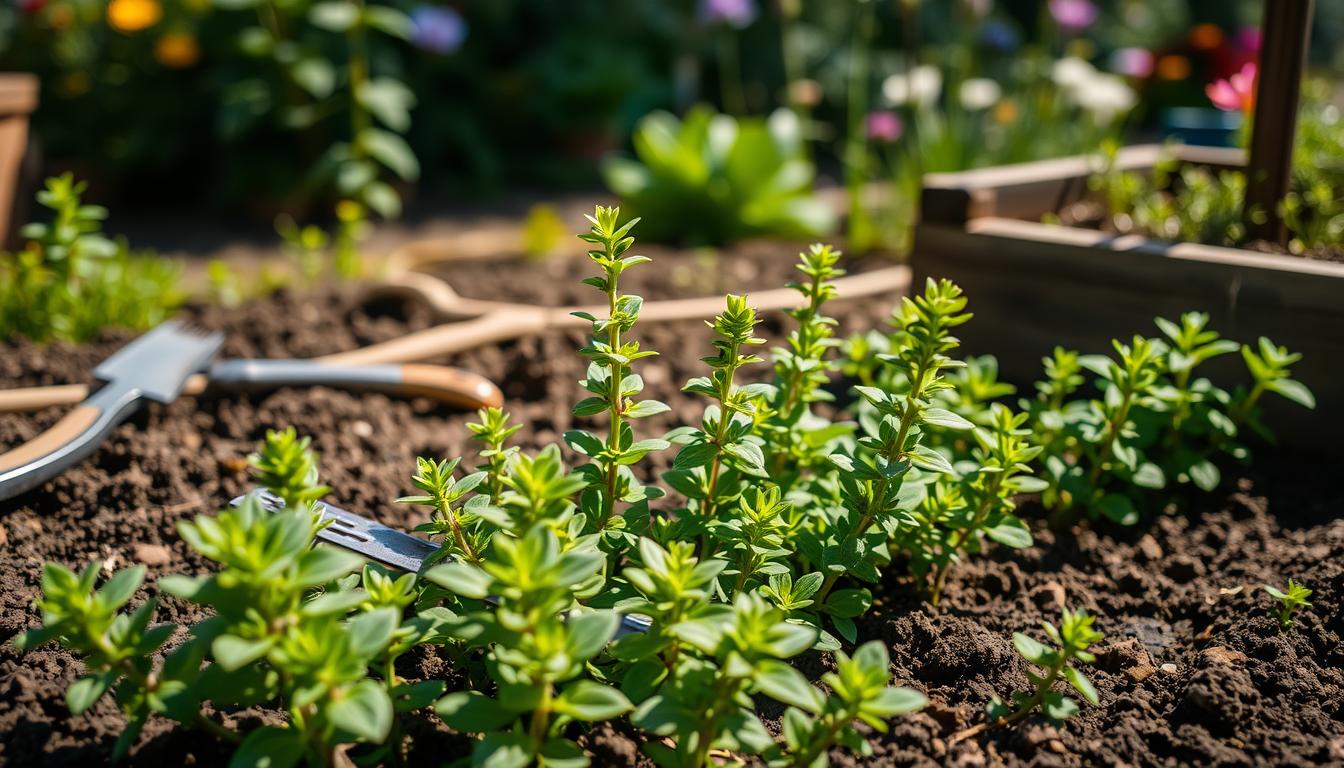
Learn how to grow the fragrant and tasty marjoram in your garden. This Mediterranean herb loves the sun and makes food taste amazing. This guide will help you grow marjoram easily, whether you’re new to gardening or not.
Key Takeaways
- Marjoram is a low-growing, sun-loving herb with a sweet and delicate flavor profile
- It can be grown in gardens or containers, making it a versatile choice for home cooks
- Proper soil preparation, watering, and fertilization are essential for successful marjoram gardening
- Marjoram thrives in well-drained, slightly alkaline soil and requires at least 6 hours of direct sunlight per day
- With the right marjoram growing tips, you can enjoy a bountiful harvest throughout the growing season
Understanding Marjoram: A Mediterranean Herb Essential
Marjoram is a beloved herb from the Mediterranean. It’s loved by gardeners and chefs for its flavor and health benefits. This plant is a treasure in the kitchen and for health.
Types of Marjoram Plants
There are many types of marjoram. The most common are sweet or knotted marjoram and pot marjoram. These plants grow low and bushy. They have leaves that smell great and flowers that attract bees and butterflies.
Key Characteristics and Benefits
Marjoram tastes mild and slightly sweet. It’s packed with nutrients like calcium and vitamins A and C. It also has antioxidants that help the liver and women with polycystic ovary syndrome.
Differences Between Marjoram and Oregano
Marjoram and oregano look similar but taste different. Marjoram is sweeter, while oregano is peppery. Marjoram leaves are round and soft, while oregano leaves are pointed and rough.
| Characteristic | Marjoram | Oregano |
|---|---|---|
| Flavor | Mild, slightly sweet | Robust, peppery |
| Leaf Shape | Rounded, velvety | Pointed, coarse |
| Usage | Fresh or dried in culinary dishes | Fresh or dried in Mediterranean and Italian cuisine |
Knowing about marjoram is key for gardeners and cooks. It’s the first step to enjoying marjoram plant care, marjoram herbs, and marjoram garden success.
How to Grow Marjoram: Essential Growing Requirements

Growing marjoram is rewarding for those who love plants. It loves full sun and well-drained soil. The soil should be slightly alkaline, between 6.5 and 7.5 pH.
Marjoram does well in a warm, sheltered spot. It’s okay with a little drought, but needs water when it’s dry.
For growing marjoram, consider a few things. You can start it from seeds, cuttings, or by dividing plants. Start seeds indoors 6 to 8 weeks before the last spring frost. Then, move the seedlings outside when they’re strong enough.
- Ideal height for marjoram plants: 8-24 inches
- Hardiness Zones where marjoram grows best: 9-10
- Germination period for marjoram seeds: 10-15 days
- Ideal height for harvesting marjoram leaves: 5-6 inches
- Spacing between marjoram plants for good air circulation: 12 inches
Keep marjoram plants trimmed when buds appear. In cold areas, grow it as an annual or bring it inside for winter.
Knowing how to grow marjoram makes it easy. It adds a Mediterranean touch to your cooking and garden.
Selecting the Perfect Location and Soil Preparation
Growing marjoram needs the right spot and soil. It loves full sun, so pick a sunny area. The soil should drain well and have a pH of 6.7 to 7.0.
Optimal Sunlight Conditions
Marjoram needs lots of sun to grow well. It does best with at least 6 hours of direct sunlight daily. In hot places, some afternoon shade helps keep leaves from drying out.
Soil pH and Drainage Requirements
Marjoram likes a neutral soil pH, between 6.7 and 7.0. Adding compost or organic matter can help the soil. It also needs good drainage, as it can’t handle wet soil. If your soil is heavy, add sand or grit to improve drainage.
Container vs. Ground Planting
- For containers, use a mix that drains well and make sure the pot has holes.
- In the ground, plant marjoram 12 inches apart for good growth and air.
- Larger containers can hold more marjoram or other herbs like rosemary or thyme.
Choosing the right spot and soil is key for marjoram to grow well. This will help you enjoy a lot of this tasty herb.
Starting Marjoram from Seeds and Cuttings
Want to grow your own marjoram? You have a few ways to do it. Growing from seed or taking cuttings is easy. Marjoram is simple to start in your garden.
Starting with marjoram seeds? Plant them indoors in spring. Use a seed starting mix. Seeds germinate in 1-2 weeks at 60°F (15°C).
Once seedlings have true leaves, harden them off. Then, move them outside after the last frost.
Or, take softwood cuttings in early to midsummer. Cuttings should be 4 inches (10 cm) long. Trim just below a leaf node. Roots will form in 3-4 weeks. Then, pot them up and watch them grow.
- Marjoram can also be propagated by division. Pull apart rooted sections from the main plant.
- Another method is layering. Peg down low-growing stems into the soil to encourage roots.
Choosing any method, marjoram is easy to grow. With patience and care, you’ll have fresh marjoram for cooking.
Proper Watering and Fertilization Techniques
Getting the right amount of water and nutrients is key for growing great marjoram. Marjoram loves dry conditions, so watering is very important.
Watering Schedule and Methods
Water marjoram often when it’s new to help it grow strong roots. Once it’s settled, it can handle dry spells if planted outside. But, if it’s in a pot, it needs more water to keep the soil moist.
Don’t overwater marjoram. Check the soil first and only water when it’s a bit dry. Water in the morning so any extra water can dry out during the day.
Fertilization Requirements and Timing
Marjoram doesn’t need a lot of fertilizer. Too much can make it grow too much foliage but not enough flavor. A light, balanced fertilizer in early spring can help it start strong.
For plants in pots, a monthly, weak liquid fertilizer can keep them growing well. Always follow the fertilizer instructions to avoid harming the roots.
Common Watering Mistakes to Avoid
- Overwatering: Too much water can cause root rot and other issues.
- Underwatering: Not enough water can stress the plant and slow its growth.
- Irregular watering: Changing the moisture too much can confuse the plant and harm its health.
Learning how to water and fertilize right will help your marjoram grow well. With a bit of care, this herb will do great in your garden or pot.
Seasonal Care and Maintenance Tips
I love gardening and know that caring for marjoram plants is crucial. Here are some tips to help your marjoram grow well all year:
Spring Pruning and Weeding
In late spring, I trim my marjoram plants to keep them small. This makes them bushy and looks neat. I also weed around young plants to help them grow better.
Post-Bloom Maintenance
When marjoram stops blooming, I cut back the stems. This helps the plant stay in shape and grow more leaves. By doing this regularly, the marjoram remains healthy and bushy throughout the growing season. It’s important to be mindful of invasive plants, though, as growing dandelions in your garden can quickly take over and compete for nutrients. Keeping an eye on unwanted plants helps ensure that herbs like marjoram thrive without too much competition.
Winter Protection for Non-Hardy Varieties
I move non-hardy marjoram inside or to a safe place in winter. In warmer places, I make sure the soil drains well to avoid water damage.
Ongoing Harvesting for Bushier Growth
I pick marjoram leaves often to make the plants bushier. This way, I always have fresh herbs ready.
By following these tips, my marjoram plants do great. They give me lots of fresh herbs. With a little care, you can have healthy marjoram in your garden too.
Harvesting and Storing Marjoram
Fresh marjoram herbs add a burst of sweet, earthy flavors to your dishes. To enjoy them at their best, learn how to harvest and store them right.
Best Time for Harvesting
Harvest marjoram leaves 4-6 weeks after planting, before they flower. This is when they taste the sweetest. Cut the leaves just above the node, leaving some stem for new growth.
Drying and Storage Methods
Drying is the best way to store marjoram. Cut the leaves just before they flower. Hang them in a dark, airy spot for a few weeks. Then, store the dried leaves in a tight container to keep the flavor.
Preserving Fresh Marjoram
To keep marjoram fresh, freeze the leaves. Put them in ice cube trays with water or broth. Once frozen, store the cubes in a freezer-safe container. This keeps the herb’s taste and texture great.
For good marjoram harvesting and storage, act fast and keep the oils in. Also, protect it from light and moisture. With a bit of care, you can enjoy marjoram’s flavors all year.
Winter Protection and Year-Round Growing
For marjoram lovers, taking care of your plants in cold months is key. With some extra effort, you can have fresh marjoram leaves all year. This is true, no matter where you live.
In zones 9 and above, marjoram is a perennial. It can survive winter with just a bit of mulch. For zones 7 and 8, more mulch is needed to keep plants safe. But in zones 6 and colder, marjoram is best treated as a summer plant. The cold weather is too harsh for it.
If you want marjoram all year, pot your plants in fall. Then, put them in a sunny spot indoors. This way, you can pick leaves whenever you want. In South Florida, marjoram does well as a winter plant. The summer heat and humidity are too much for it.
Success in marjoram plant care and marjoram gardening comes from knowing your plants’ needs. With planning and care, you can have plenty of this tasty herb all year.
Common Growing Problems and Solutions
Growing marjoram can be rewarding, but it faces challenges. Let’s look at common problems and solutions to help your marjoram grow well.
Pest Infestations
Aphids and spider mites often attack marjoram. Aphid infestations can be controlled by pruning out affected leaves or shoots when the population is limited. For aphids, insecticidal soaps or oils like neem or canola oil work well.
Spider mites thrive in dusty conditions and attack water-stressed plants. To fight them, spray with water, use insecticidal soap, and avoid chemicals that help mites grow.
Disease and Fungal Issues
Marjoram is usually healthy, but fungal diseases like root rot can occur. Poor drainage and dampness are common causes. Make sure the soil drains well to avoid these issues.
Proper air circulation and avoiding overwatering can also help prevent fungal diseases.
Winter Protection
Non-hardy marjoram needs protection from cold in winter. A sheltered spot or mulching can help it survive the cold.
By tackling these common problems and following marjoram plant care and marjoram growing tips, your marjoram will thrive. This will give you a rich harvest.
Conclusion
Growing marjoram well means knowing its Mediterranean roots and giving it the right care. It needs full sun, well-drained soil, and the right amount of water. Regular picking and upkeep will give you plenty of this tasty herb for cooking.
By using the tips from this article, gardeners can enjoy marjoram’s beauty and taste every year. It’s great as a companion plant or on its own. Marjoram adds flavor and health benefits to any garden.
Marjoram is easy to grow and does well in many places. It’s perfect for both new and seasoned gardeners. Adding marjoram to your cooking and enjoying its health perks can make your garden a Mediterranean paradise.

