


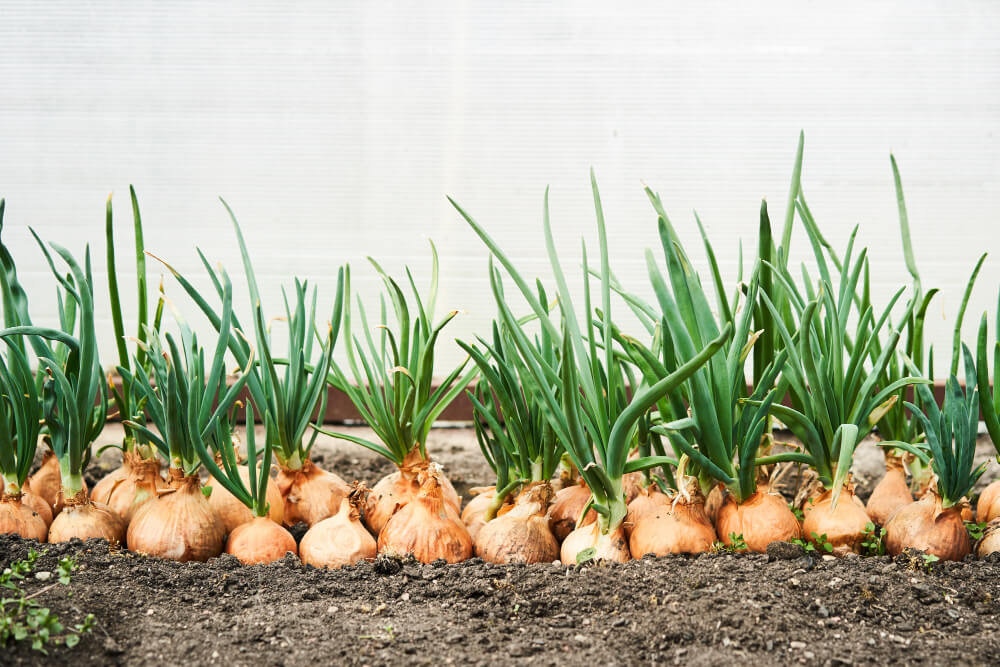
Growing your own onions at home is rewarding and easy. You can start with seedlings, seeds, or sets. Onion cultivation is a simple and fun gardening activity.
Onions love full sun and well-drained soil with a pH of 6.0 to 6.8. They need consistent moisture to grow well. Onions have been used for over 5,000 years as food, medicine, and in art.
They are full of good stuff like antioxidants, dietary fiber, vitamins C and B6, potassium, folate, calcium, and iron.
Key Takeaways
- Onions can be grown from seedlings, seeds, or sets
- Onions require full sun, well-drained soil with a pH of 6.0 to 6.8, and consistent moisture
- Onions are rich in antioxidants, dietary fiber, vitamins C and B6, potassium, folate, calcium, and iron
- Onions have been used as food, medicine, and in art for over 5,000 years
- Onion cultivation is a simple and rewarding gardening venture
Understanding Onion Varieties and Types
As a home gardener, knowing about onion varieties is key. Onions fall into three main types: short-day, long-day, and day-neutral. Each type needs different amounts of daylight to grow.
Short Day vs. Long Day Onions
Short-day onions, like ‘Vidalia’ and ‘Texas Sweet,’ need only 10-12 hours of daylight. They grow well in the south. Long-day onions, such as ‘Yellow Granex’ and ‘Walla Walla,’ need 14-16 hours of daylight. They do best in the north. Day-neutral onions, like ‘Evergreen Bunching’ and ‘Red Marble,’ don’t need as much daylight. They grow well in many places.
Different Onion Colors and Flavors
- Yellow onions are strong and pungent, great for cooking.
- Red onions are sweet and good in salads.
- White onions taste delicate, perfect for Mexican dishes.
- Shallots grow in clusters and have a mild flavor.
Popular Varieties for Home Gardens
- Gold Coin – A short-day yellow onion that stores well.
- Red Burgundy – A sweet, mild red onion.
- Evergreen Bunching – A day-neutral variety that grows multiple green onions.
- Tokyo – A long-day white onion with a crisp taste.
- Red Rock – A long-day red onion with a strong flavor.
When picking onions for your garden, think about your local weather, daylight needs, and taste preferences. This will help you grow a variety of onions that taste great.
| Onion Variety | Day-length Requirements | Maturity Time | Flavor Profile |
|---|---|---|---|
| Vidalia | Short-day | 75-110 days | Sweet and mild |
| Yellow Granex | Long-day | 90-110 days | Pungent and flavorful |
| Evergreen Bunching | Day-neutral | 110 days | Tender and mild |
Best Time to Plant Onions in Different Zones
Planting onions at the right time is key for a good harvest. Onions grow best in cooler weather. So, the best time to plant them changes based on your zone.
In warmer zones like 9 and 10, plant bulbing onions in the fall. This way, you’ll get a late summer or fall crop. For spring onions, shallots, and small onions, plant in the spring.
In cooler zones, like 5 and 6, plant onions in early spring. This lets them grow strong roots before summer gets hot. It’s important to plan well, as different onions need different amounts of daylight to grow right.
| Growing Zone | Recommended Planting Time | Onion Varieties |
|---|---|---|
| Zones 9-10 | Fall | Bulbing onions |
| Zones 5-6 | Early Spring | Spring onions, shallots, smaller onion varieties |
Think about what your onions need and your local weather. Planting at the right time helps your onions grow well. This leads to a tasty and successful crop.
Soil Requirements and Garden Preparation
Onions are easy to grow at home. They take a few months to grow from sprouts to juicy bulbs. To get a good harvest, it’s key to prepare your garden soil right.
Onions do best in well-drained soil with a pH between 6.0 and 6.8.
Ideal pH Levels and Soil Composition
First, test your soil and adjust the pH if needed. Onions like slightly acidic to neutral soil. Adding aged compost or organic matter helps.
This improves soil structure and adds nutrients. It helps your onion plants grow strong and healthy.
Preparing Raised Beds vs. In-Ground Planting
If your soil is heavy clay, consider raised beds for onions. For in-ground, add 3 inches of compost to the top 6 inches of soil.
Adding Organic Matter and Fertilizers
Onions grow well in soil rich in organic matter. Use aged compost, well-rotted manure, or 2-2-2 liquid fish emulsion. These provide the nutrients for strong roots and flavorful bulbs.
Preparing your garden soil well means a great onion harvest. With the right soil and care, you can enjoy fresh, homegrown onions all season.
How to Grow Onion: Step-by-Step Guide
Growing onions at home is rewarding. It gives you a steady supply of this versatile vegetable. This guide will help you plant onions and grow them well, whether you’re new or experienced.
To begin, plant onion sets 1 inch deep and 6 inches apart. Make sure the neck of the onion is not buried. If using onion seeds, keep the soil moist during germination. Once seedlings are pencil-thick, transplant them into your garden.
- Water your onion plants regularly, keeping the soil moist but not waterlogged.
- Fertilize your onions throughout the growing season with a continuous-release plant food to ensure they receive the necessary nutrients.
- Monitor for any signs of pests or diseases, and take appropriate action to protect your crop.
By following these onion cultivation techniques, you’ll grow a lot of onions. Remember, growing onions needs patience and attention to detail. Watering consistently and ensuring proper soil drainage are crucial to avoid rotting and diseases. Additionally, regular weeding will help prevent competition for nutrients, allowing your onions to thrive. Once you’ve mastered onion cultivation, you might also be interested in learning how to grow garlic, as both crops share similar requirements for optimal growth and care.
Essential Growing Conditions for Healthy Onions
To grow tasty onions at home, you need to know their special needs. Let’s explore what makes onions grow well.
Sunlight Requirements
Onions love the sun and need full sun exposure to grow well. They take 90-110 days to grow big enough when they get 14+ hours of daylight. But, if they get 10-12 hours of daylight, they grow in 110 days in warmer places.
In colder places, they grow in 75 days if planted in early spring. Day-neutral onions need 12-14 hours of daylight. They take about 110 days to grow and are best for zones 5-6.
Watering Schedule and Techniques
Onions need steady moisture to grow well. Water them when the top inch of soil feels dry. Use shallow, frequent watering because their roots are shallow.
Mulching with grass clippings helps keep the soil moist and cool.
Temperature Considerations
Onions grow best in cool weather. They can handle light frosts and snow but not extreme temperatures. They like cooler weather before they start growing bulbs, between 40°F and 75°F.
But, if it gets too hot or too cold after they start growing, they might bolt. This can make them less good for storing.
Container Growing and Space Management
Onions can grow well in containers, not just in the ground. This is great for those with little space or living in apartments. Container growing lets you have a big onion harvest without using too much space.
For growing onions in containers, pick a pot that’s at least 10 inches deep. This gives the roots room to grow and the bulbs space to expand. Each onion plant needs about 3 to 4 inches of space. A 5-square-foot container can hold up to 60 onion plants, making the most of your space.
Onions like a well-draining, loamy soil that’s slightly acidic, with a pH of 6.0 to 7.0. Make sure the container is 1 to 2 inches off the ground to help with drainage. Use a 13-40-13 fertilizer at planting, and then add ammonium sulfate every 3 to 4 weeks until the bulbs start to form.
Watering is important for onions in containers. They need about 1 to 2 inches of water each week. Use the “knuckle rule” to check if the soil is dry. With the right care, your onions can grow well, even in tight spaces.
Container growing is great because you can move your onion plants if needed. This lets you use your space better. Whether you have a small patio, balcony, or a garden, growing onions in containers is a smart way to save space and get a big harvest.
Onion Plant Care and Maintenance
Keeping your onion plants healthy is key for a great harvest. We’ll cover the basics of onion care. You’ll learn how to keep your onions growing well.
Mulching Methods
Putting a thin layer of mulch around your onions helps a lot. It keeps the soil moist and weeds away. Use weed-free grass clippings or organic stuff like straw or shredded leaves.
But don’t pile the mulch too high. It can block air and cause rot.
Pest Control Strategies
Watch out for pests like onion thrips, aphids, and onion root maggots. Use plants like nasturtium, alyssum, sunflowers, and zinnias to attract good bugs.
Disease Prevention
Good air flow and not too much water are important to avoid diseases. If you see sick plants, take them out fast. This stops diseases like onion rot or fungal blights from spreading.
Make sure your onion bed drains well. You might want to use row covers or cloches for extra protection.
By following these tips, you’ll have a healthy onion crop. And you’ll get to enjoy what you grow.
Harvesting Tips and Timing
Knowing when to harvest your onions is key for a good crop. The best time to pick your onions depends on the type and your area’s weather. Generally, it’s best to harvest onions when their tops start to turn yellow and fall over.
For spring onions and scallions, start picking them when they’re 4-6 inches tall. Just pull or cut them from the ground, keeping a bit of stem attached.
- Wait until the onion tops turn yellow and start to fall over, usually in mid to late summer.
- Gently lift the onions from the ground, being careful not to damage the bulbs.
- Cure the harvested onions in a warm, well-ventilated area for 2-4 weeks to allow the skins to dry and harden.
- Once cured, the onions can be stored in a cool, dry place for several months.
Some onions, like the Tokyo onion, can grow big, up to 4 inches in diameter. If you want bigger onions, leave them in the ground a bit longer. But watch them closely to avoid them getting too old.
| Onion Variety | Typical Harvest Time | Storage Life |
|---|---|---|
| Sweet Onions | Summer | 1-3 months |
| Storage Onions | Late Summer/Early Fall | 3-9 months |
By following these harvesting tips and knowing the best timing for your onions, you can have a great harvest. This will give you tasty onions for months.
Storage and Preservation Methods
Storing and preserving your onions right is key to keeping them fresh. This way, you can enjoy their taste all year. Let’s look at how to store your onions properly.
Curing Process
First, cure your onions after picking. Place them in a warm, airy spot for 7-10 days. This makes the outer skin dry and strong, which is vital for keeping them fresh.
After curing, trim the tops and roots. Also, clean off any dirt without peeling the outer skin.
Long-term Storage Solutions
- Keep cured onions in a cool, dry spot like a basement or root cellar. The temperature should be 35-40°F, and humidity 65-70%.
- For sweet onions, wrap each one in newspaper. Store them in the fridge for up to 3 months.
- Make onion braids to hang in your kitchen. They look good and keep onions fresh.
Optimal Storage Conditions
Good storage conditions are essential for long-lasting onions. Keep them in a dark, cool spot with air flow. Don’t store onions with potatoes, as potato gases can make onions spoil faster.
| Onion Variety | Typical Storage Life |
|---|---|
| Storage Onions | 6-9 months |
| Sweet Onions | 2-3 weeks |
Conclusion
Growing onions at home is rewarding. It gives you fresh, tasty onions for many dishes. Even beginners can grow onions with the right steps.
Choosing the right onion type is key. You can pick from short-day, long-day, or day-neutral onions. Each type grows well in different places across the U.S.
Knowing what your onions need is important. This includes the right soil, water, and temperature. This way, your onions will grow big and strong.
There’s nothing like picking a fresh onion from your garden. This guide will help you grow lots of onions. Enjoy the process and the yummy onions in your cooking.

