


If you want to add sweet flavor and color to your backyard, growing plum trees is a great idea. Plum trees (Prunus domestica, Rosaceae) are known for their juicy fruit. They make any landscape more beautiful.
These trees belong to the rose family, like cherries, peaches, nectarines, and apricots. They grow fruit in clusters. You can pick them in late summer or early fall.
Plums are great for baking, making jam, and sauces. They also have vitamin C and antioxidants. This makes them a healthy choice for your family.
Key Takeaways:
- Plum trees belong to the rose family and produce juicy, stone fruit in clusters.
- Plums are harvested in late summer or early fall and can be used for baking, jam, and sauces.
- Plums are a good source of vitamin C and antioxidants, offering nutritional benefits.
- Growing plum trees can add beauty and flavor to your backyard garden.
- Proper care and maintenance are essential for healthy plum tree growth and fruit production.
Introduction to Plum Trees
Plum trees come in many types and can grow well in different climates in the US. They range from hardy European varieties to tasty Japanese plums. Each type adds beauty and fruit to any garden.
Types of Plum Trees
Plum trees fall into three main groups: European, Japanese, and American hybrids. European plum trees are tough and can grow on their own, good for many US areas. Japanese plum varieties do best in warm places and need another tree to pollinate. American hybrid plums are the toughest, even growing in USDA Zone 3.
Benefits of Growing Plums
Plum trees give more than just yummy fruit. They’re great for cooking, from jams to pies. Plus, they’re full of vitamins, minerals, and antioxidants that help keep you healthy.
USDA Growing Zones
The zones where plum trees grow depend on the type. European plums do well in zones 4 to 9. Japanese plums like zones 5 to 9. American hybrids can even grow in zone 3.
Selecting the Perfect Planting Location
Choosing the right spot for your plum tree is key to its growth. The location you pick will affect how well your tree does. It’s important to pick wisely.
The best spot for a plum tree has loamy, well-drained soil. It should get full sun, 6-8 hours a day. Stay away from low spots where frost can harm the early flowers. Instead, pick a sheltered spot facing south or west for better fruit.
Think about how close your tree is to other things. Plum trees need 8-10 feet from patios, water pipes, and sewers. This keeps them from getting damaged. Also, space them right for growth. Standard trees need 18-20 feet, semi-dwarf 12-15 feet, and dwarf 8-10 feet.
| Plum Tree Variety | Recommended Spacing |
|---|---|
| Standard | 18-20 feet |
| Semi-Dwarf | 12-15 feet |
| Dwarf | 8-10 feet |
By picking the right plum tree planting site and sunlight, your tree will thrive. You’ll enjoy a great harvest for many years.
How to Grow Plum: Essential Steps for Beginners
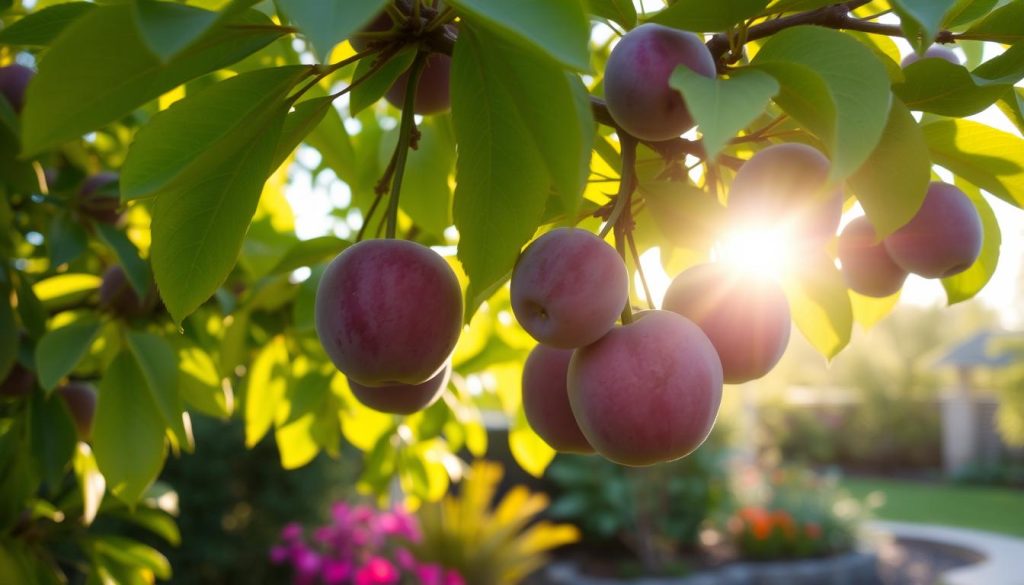
Growing plum trees can be very rewarding. It adds a special touch to your backyard. To make sure your plum tree grows well, let’s look at what it needs.
Soil Requirements
Plum trees like slightly acidic soil with a pH of 6.0-6.8. The soil should drain well and be full of organic matter. Adding compost or aged manure can make the soil better.
Sunlight Needs
Plum trees need lots of sunlight. They should get at least 6 hours of direct sun a day. It’s important to pick a spot that gets plenty of sun.
Spacing Guidelines
Spacing is very important for plum trees. Standard trees need 20 to 25 feet between them. Dwarf trees can be 10 to 15 feet apart. This lets each tree get enough air and sunlight.
By meeting the soil, sunlight, and spacing needs, you can help your plum tree grow well. It will give you lots of tasty plums. Similarly, growing a lime tree requires attention to proper care, such as ensuring well-drained soil and adequate sunlight. Just like with your plum tree, a lime tree thrives with the right spacing to allow for healthy root development and air circulation. By nurturing both trees, you’ll enjoy an abundant harvest of fresh fruits throughout the season.
Planting Your Plum Tree
Planting plum trees is exciting and rewarding. But, it needs planning and preparation for your trees to thrive. When planting plum trees, picking the right time and using the right techniques is key.
The best time to plant is in early spring, when the ground is thawed. This lets the roots grow before summer gets hot. Choose a spot that gets full sun and has well-drained soil with a pH of 6.0-7.0.
- Dig a hole three times the width of the plum tree’s root ball and as deep as the root system.
- For bare-root trees, create a small mound in the center of the hole and spread the roots over it.
- For grafted plum trees, ensure the graft union is 1-2 inches above the soil line.
- Backfill the hole with a mixture of the native soil and up to 1/3 dehydrated cow manure, garden compost, or peat moss.
- Water the plum tree thoroughly after planting to settle the soil and eliminate air pockets.
- Consider staking young plum trees for the first year or two to provide additional support and stability.
Remember, proper planting plum trees and following the right plum tree planting techniques is essential for the long-term health and productivity of your plum orchard. With a little care and attention, your plum trees will be thriving in no time!
| Planting Depth | Grafted Plum Trees | Bare-Root Plum Trees |
|---|---|---|
| Soil Line | 1-2 inches above | Spread roots over mound |
Watering Requirements and Schedule
Keeping your plum trees watered right is key to their health and growth. Plum trees need water when the soil is dry up to an inch deep. But, how often you need to water can change with the seasons and your area’s weather.
Summer Watering Tips
In the summer, when it’s hot, you’ll need to water your plum trees more often. Water them deeply, up to 24 inches, every two weeks. This helps their roots grow strong and keeps them moist.
Winter Watering Guidelines
In the winter, your plum trees need less water. Still, they need a steady water supply to keep their roots healthy. Water them every two to four weeks, adjusting as needed based on weather and soil moisture.
Signs of Over and Under Watering
Watch your plum trees for signs of too much or too little water. Yellow leaves, root rot, and slow growth mean too much water. Leaf drop and slow growth suggest not enough water. Check the soil moisture and adjust your watering to keep your trees healthy.
Fertilizing Your Plum Trees
Proper fertilization is key for your plum trees’ health and fruit. Established trees need two fertilizations a year. This is in early spring (March) and late summer (August) for Zones 8 or 9. For Zones 6 or 7, one spring application is enough.
Choose a balanced fertilizer with nitrogen (N), phosphorus (P), and potassium (K). Also, look for iron, zinc, and manganese. A 10-10-10 NPK ratio is best for strong growth and quality fruit.
| Nutrient | Role in Plum Tree Health |
|---|---|
| Nitrogen (N) | Encourages lush, green foliage and vegetative growth before fruit-bearing years. |
| Phosphorus (P) | Promotes robust root development and overall plant vigor. |
| Potassium (K) | Enhances disease resistance, winter hardiness, and fruit quality. |
Don’t fertilize too late in the season. It can harm new growth in cold weather. Stop by mid-August to prepare for winter.
Success in plum tree fertilizer comes from matching nutrients to growth stages. Talk to your local extension or a horticulturist for the best fertilizing plum trees plan for your area.
Pruning Techniques for Healthy Growth
Proper pruning is key for your plum trees’ health and fruit. The right timing and techniques boost growth and fruit quality. Let’s look at how to prune plum trees for the best results.
Timing Your Pruning
The best time to prune plum trees is early spring or mid-summer. Pruning then helps avoid infections and promotes healthy growth. Don’t prune in winter when the tree is dormant, as it makes the tree more vulnerable to disease.
Pruning Methods for Different Varieties
Pruning techniques vary by plum tree variety. For Japanese plum varieties, create an “open center” shape. This means keeping three to five main limbs at different heights and angles. It helps with light and fruit growth. European plum trees do well with a central leader shape. This includes a single main limb and lateral branches spaced out vertically.
Training Young Trees
Young, unbranched plum trees need careful pruning. Cut them back to 28-36 inches when planting. This helps the tree grow a strong leader and well-spaced limbs. As the tree grows, keep pruning to shape it right.
Pruning aims to improve growth, fruit quality, and tree longevity. Proper pruning and training lead to many fruitful harvests.
Pollination Requirements
To grow healthy plum trees, knowing about pollination is key. Most Japanese plums need another tree to pollinate. But, many European plums can pollinate themselves. Still, they grow better with another tree nearby.
The Santa Rosa plum is a good helper for other Japanese plums. For European plums, growing two trees of the same color is best. This ensures they pollinate well.
| Plum Tree Type | Pollination Requirement | Recommended Pollinator Varieties |
|---|---|---|
| Japanese Plums | Cross-pollination required | Santa Rosa (partially self-fruitful), Methley |
| European Plums | Self-fertile, but better yields with cross-pollination | Grow two or more varieties from the same color group |
| Plumcots | Require cross-pollination | Methley, Santa Rosa, Superior, Bubblegum |
Choosing the right plum tree varieties is important. By picking the right ones and ensuring pollinating plum trees, gardeners can get a big plum harvest every year.
Common Plum Tree Diseases and Prevention
As a plum tree lover, I know how vital it is to keep them healthy. Diseases like brown rot, black knot, and plum pockets can harm them. Knowing the signs and taking steps early can help our plum trees stay healthy for a long time.
Identifying Disease Symptoms
Brown rot causes plum fruits to decay and stick to the tree. This leads to spores in the spring. Black knot shows up as black, swollen growths on branches, which can hurt the tree. Plum pockets make fruits hollow and discolored, and can spread the disease.
Natural Treatment Methods
I like to use natural ways to fight plum tree diseases. Neem oil is great for fighting fungi and pests. Copper-based fungicides can also help with diseases like brown rot and bacterial leaf spot.
Preventive Measures
Keeping my plum trees healthy starts with prevention. I cut off sick branches and keep the area clean. I also make sure they have good soil and enough space. Watching them closely and acting fast helps them stay healthy and fruitful.

