


As a gardener, knowing when to plant apricot trees is key for a good harvest. Apricots (Prunus armeniaca) love the sun and grow well in warm places. They can grow 10 to 20 feet tall and wide.
Planting in the spring is best. This lets the trees grow roots and get used to the weather before it gets too hot. This early start helps them grow and produce fruit better.
Apricots do best in USDA Hardiness Zones 4-9. Some types are better for certain zones.
Key Takeaways:
- Apricot trees thrive when planted in the spring, as soon as the soil can be worked.
- Planting in spring allows the trees to establish before summer heat arrives.
- Apricots grow best in USDA Hardiness Zones 4-9, with some varieties suited for specific zones.
- Apricot trees require at least 8 hours of direct sunlight per day.
- Proper soil preparation and planting techniques are essential for the health and productivity of apricot trees.
Understanding Apricot Trees: Basic Characteristics
Apricot trees are a favorite in many gardens. They give lots of sweet, juicy fruit. Knowing how apricot trees grow and size is key to growing them well.
Growth Habits and Size
Apricot trees grow to be 10-20 feet tall and wide. This size is easy to manage in most backyards. They grow fast, adding 10-20 inches each year.
USDA Hardiness Zones
Apricots grow well in many climates, from USDA Hardiness Zones 4-9. This makes them good for many gardeners in the U.S. But, pick the right apricot variety for your area.
Common Varieties for Home Gardens
- Harcot: A medium to large orange-colored apricot variety that performs well in Zones 4-9.
- Moorpark: A classic apricot variety with large, golden-yellow fruit, thriving in Zones 4-8.
- Puget Gold: An elongated, tangerine-orange apricot variety suitable for Zones 5-9.
Most apricot trees don’t need another tree to grow fruit. But, having another tree nearby can help with pollination and more fruit.
When Do You Plant Apricot: Optimal Timing Guide
Planting apricot trees at the right time is key for their growth and fruit. The best time to plant apricot trees is in the spring. This is when the soil is ready.
In USDA Hardiness Zones 6 and colder, pick a spot that shields from harsh winds. Apricots bloom early. So, avoid areas with late frosts to protect the blossoms.
For container-grown apricot trees, you can plant any time of the year. But spring is still the optimal planting season. It helps the trees grow strong roots for the growing season.

Timing the apricot planting season correctly helps trees start strong. With care, they can thrive for years. They become a delicious part of any home orchard.
Selecting the Perfect Planting Location
Choosing the right spot for your apricot trees is very important. Apricots do best in places with cold winters and hot, dry summers. This ensures your trees stay healthy and grow well.
Sunlight Requirements
Apricot trees need at least 8 hours of sunlight a day. Pick a spot that gets lots of sun. This helps your trees grow lots of tasty fruits.
Soil Conditions
Apricots like soil that drains well and is loose. Avoid heavy clay or wet areas. The best soil pH is between 6.5 to 7.5.
Protection from Elements
In cold places, choose a spot that shields from harsh winds. This protects your trees from frost. In dry areas, avoid planting near watered lawns. Apricots need less water than grass.
Think about sunlight, soil, and weather when picking a spot. This way, your apricot trees will grow strong and give you lots of yummy fruit.
Essential Soil Preparation Steps
Soil preparation is key to growing apricot trees well. The right soil helps your apricot tree grow strong. Here’s how to prepare the soil for your apricot tree to thrive.
- Dig a hole as big as the tree’s root ball. This gives the roots room to grow.
- Make sure the root flare is just above the soil line. This prevents the tree from being planted too deep.
- If your soil is bad, add garden compost or well-rotted manure. This boosts the soil’s nutrients and helps with drainage.
- When planting against a wall, dig the hole 30cm (1ft) away. Angle the tree slightly towards the wall. This ensures good air flow and prevents stress.
By following these steps, you’ll set your apricot tree up for success. Remember, good soil is the base for healthy apricot tree care and apricot cultivation.
Planting Techniques and Methods
Planting apricot tree seedlings needs careful planning. We’ll look at bare-root and container-grown trees. Also, we’ll talk about how far apart to plant them for apricot cultivation.
Bare-Root Planting
For bare-root apricot tree seedlings, dig a hole wider than the roots. Make it deep so the root flare is just above the soil. Spread out the roots and fill the hole with soil, packing it firmly to avoid air pockets.
Container-Grown Trees
Planting apricot trees from containers is different. Remove the tree from the pot carefully, keeping the soil around the roots. Dig a hole a bit larger than the rootball. Plant the tree at the same depth as it was in the container.
Spacing Requirements
For fan-shaped apricot trees, leave 3.5-5m (11-16ft) between each tree. For standard apricot trees, give 3-4m (10-13ft) of space. This depends on the rootstock.
Good spacing is key for air, sunlight, and growth. Planning your layout well will help your trees thrive.
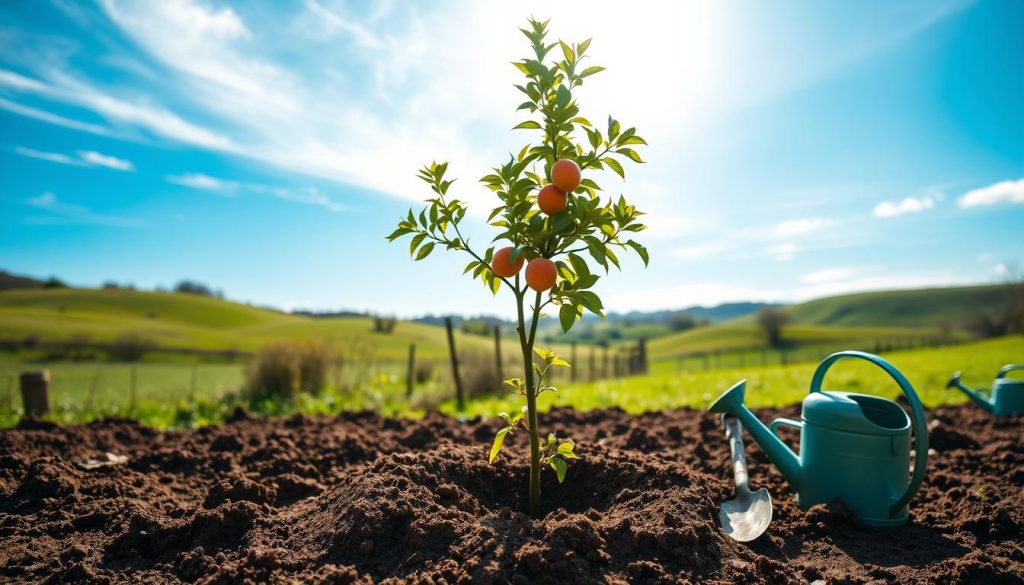
Watering and Fertilization Guidelines
Watering and fertilizing your apricot trees right is key for their health and fruit. Whether your trees are new or old, these tips will help your apricot orchard grow well.
For new apricot trees, water them deeply and often in spring and summer. Try to give them about 2 inches of water each week. This helps their roots grow strong.
When your trees get older, water them when it’s dry, especially when the fruit is growing. This keeps the fruit big and round. Older trees usually need about 2 inches of water a week, but adjust based on the weather.
- Newly planted trees need deep, regular water in spring and summer.
- Older trees need water when it’s dry, especially when fruit is growing.
- Mature apricot trees usually need about 2 inches of water a week.
Fertilizing your apricot trees is also very important. Use a high-potassium fertilizer in late winter, just before they bud. This helps with flower and fruit growth.
If your trees are in pots, they need more water and food. Use a balanced, water-soluble fertilizer every 2 to 4 weeks in growing season. This keeps your potted trees healthy.
To keep the soil moist, add a 2-inch layer of well-rotted manure or compost mulch in early spring. This keeps moisture in and stops weeds.
| Watering Needs | Fertilization Recommendations |
|---|---|
|
|
By following these tips, your apricot trees will get the care they need. They will grow well and give you lots of delicious fruit every year.
Pruning and Training Young Trees
Keeping your apricot trees healthy and growing well needs careful pruning and training early on. This important step helps them grow strong and balanced. This way, they can produce lots of fruit for many years. Here are some key tips and techniques for pruning and training young apricot trees.
Initial Pruning Tips
The best time to prune apricot trees is in late winter, before the buds swell. This lets the cuts heal fast and keeps disease and pests away. Remove any broken, rubbing, or diseased branches during the first pruning. Also, get rid of suckers, or vertical shoots, from the base or lower trunk.
Creating the Proper Shape
To make a strong, well-shaped apricot tree, pick 3-5 main scaffold branches. They should form a V-shaped framework. This shape lets light and air in, which is key for healthy growth and fruit.
Maintenance Pruning
As the apricot tree grows, keep pruning every year. Remove about 25% of the interior growth to keep the shape right and prevent overcrowding. This thinning lets sunlight reach the inner branches and fruit, helping them ripen well. Also, when the young apricots are grape-size, thin out the extra fruitlets. Leave 4-6 inches between each fruit.
By following these pruning and training tips, you’ll help your apricot trees grow strong and healthy. They’ll give you lots of fruit and stay vigorous for a long time. Remember, good apricot tree care and apricot cultivation practices are key for great orchards and tasty home-grown apricots.
Common Challenges and Solutions
Growing apricot trees can be rewarding but also has its challenges. As someone who loves apricots, I’ve faced many issues. Let’s look at some common problems and how to solve them to help your trees grow well.
One big issue is root disease from too much water in the soil. Make sure the soil drains well where you plant. Also, watch out for cankers, a fungal infection that harms the bark and branches. Keeping the tree safe from injury helps prevent cankers.
Frost can damage the delicate blossoms, hurting fruit production. To protect your trees, cover them with bedsheets or hessian fabric on cold nights. Hand-pollinating flowers can also help get more fruit, especially in greenhouses.
- Yellowing leaves and branch dieback may mean root problems. So, check soil moisture and drainage often.
- Shot hole disease causes holes in leaves, leading to early leaf fall in spring.
- Sunburn damage can scorch leaves and cause loss. Make sure your trees get enough shade or wind protection.
- Fruit shedding happens when trees are stressed by too much fruit. Thin the fruit carefully to avoid this.
To solve these problems, use a balanced approach. Use fungicides like Bordeaux mixture to fight diseases. Water and fertilize right, and manage pests with neem oil or insecticidal soap. Prune and train young trees to keep them healthy and productive.
By tackling these common issues, your apricot trees will thrive. They will give you a great harvest every year.
| Common Challenge | Potential Causes | Solutions |
|---|---|---|
| Root diseases | Excess soil moisture | Improve drainage, avoid overwatering |
| Cankers | Tree injuries | Avoid damaging the tree, use Bordeaux mixture |
| Frost damage to blossoms | Cold snaps | Cover trees with bedsheets or hessian, hand-pollinate flowers |
| Yellowing leaves and branch dieback | Root problems | Monitor soil moisture, improve drainage |
| Shot hole disease | Fungal infection | Use fungicides, maintain good tree health |
| Sunburn damage | Excessive sun exposure | Provide shade or windbreaks |
| Fruit shedding | Excessive fruit load | Thin fruits, reduce stress on the tree |
By facing these common challenges and using the suggested solutions, your apricot trees will stay healthy and productive. Remember, patience and being proactive are key to successful apricot tree care and apricot cultivation.
Conclusion
Learning to grow apricot trees is exciting. It needs the right timing, a good spot, and care. I’ll plant in spring, pick a sunny spot, and water and prune often.
This way, I’ll get to enjoy fresh apricots from my trees. It’s all about the timing, care, and growing conditions.
By following the tips in this article, I’m set to grow apricots. I’m looking forward to enjoying the fruits of my hard work.
Apricot trees can be tricky, but the effort is worth it. I’m eager to start and see my trees grow. They’ll add a tasty touch to our meals for years.

