


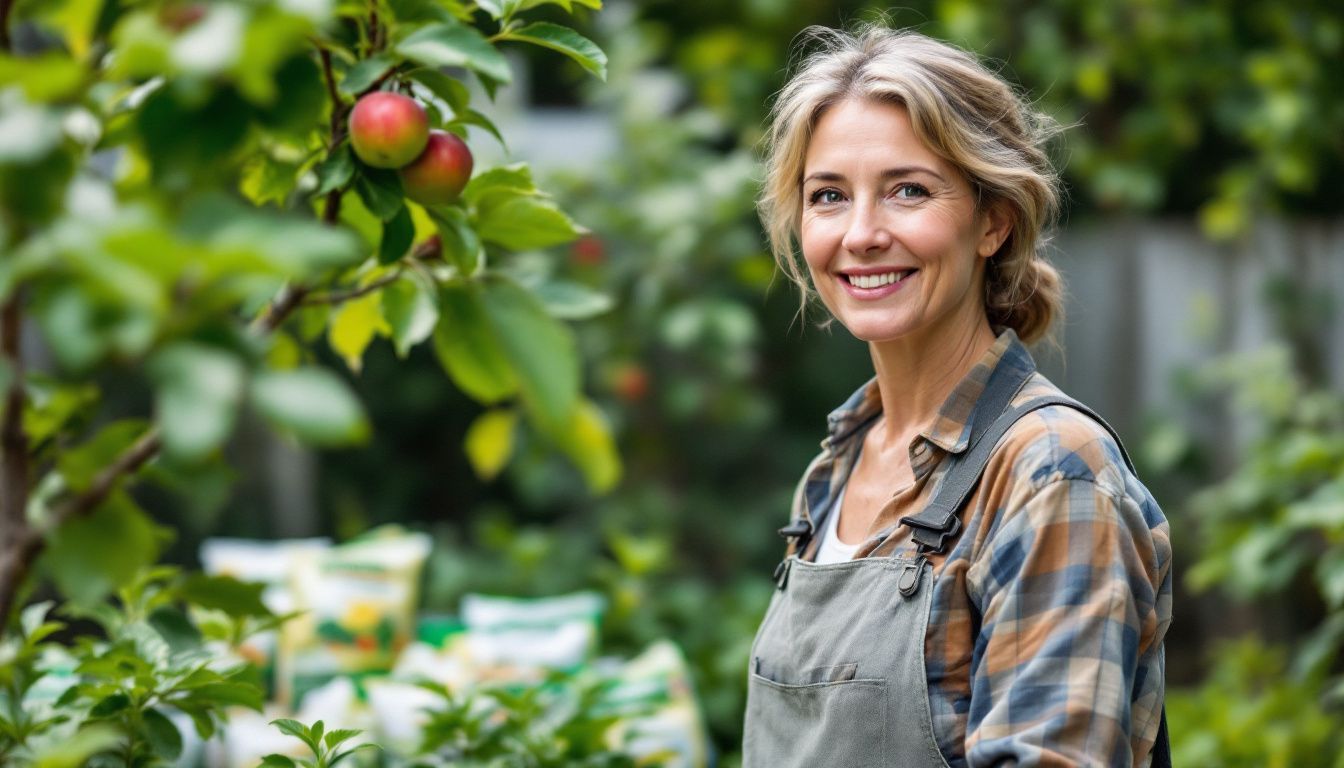
Selecting the ideal fertilizer for apple trees can sometimes feel overwhelming. After intensive research, I came across the key to success. This article will help you choose and apply the perfect fertilizer for your apple trees.
So, it’s time to prepare for some impressive fruit yield.
Key Takeaways
- Apple trees need nitrogen, phosphorus, and potassium to grow. These nutrients help them have strong leaves, roots, and produce more fruits.
- You can choose between synthetic fertilisers or organic options like manure for your apple trees. Synthetic ones work fast but organic improves the soil over time.
- Plant apple trees in autumn for best results. Use fertiliser in early spring just before they start growing again.
- Too much fertiliser is bad for apple trees. It can hurt their roots and make fruit smaller. Once a year is enough for young trees.
- Testing your soil helps you know what type of fertiliser your apple tree needs.
Key Nutrients Essential for Apple Tree Growth
For apple trees to thrive, they need three main nutrients – think of them as the tree’s food. Ever wonder why some apples are juicier and bigger than others? Well, it’s all down to **nitrogen, phosphorus**, and **potassium**.
These elements are like the secret sauce that helps your apple tree grow strong and produce lots of fruit.
Importance of Nitrogen, Phosphorus, and Potassium
Nitrogen is the big player for making sure apple trees have strong, green leaves. Every year, these trees need nitrogen to grow well. It’s like how we need a balanced diet to stay healthy.
Trees use nitrogen to turn sunlight into energy, which helps them produce delicious apples.
Now, let’s talk about phosphorus and potassium. Phosphorus takes care of the roots. Strong roots mean a sturdy tree that can take up water and nutrients better. Potassium is all about helping with bud and fruit development.
Imagine it as the boost that flowers and fruits need to form properly. Plus, every three years, apple trees get 25g/m² of sulfate of potash for enough potassium.
Best Fertiliser Types for Apple Trees
Selecting the ideal fertilizer for your apple trees can sometimes feel like a complex game, correct? However, it need not be. You have two primary routes: synthetic and organic fertilizers. Synthetic variants act swiftly, providing trees with immediate nutrients.
Organic ones, such as compost or manure, release slowly yet enhance soil health over time.
So, which is the ideal for your garden’s apple trees?
Well, it is dependent on your aims. If your desire is quick growth or rectifying nutrient deficits, synthetic could be a suitable choice. For enduring soil health and steady growth, organic is beneficial.
Both options have their prominent types—synthetic fertilizers frequently appear in balanced formulas (like 10-10-10), ideal for young fruit trees requiring everything from nitrogen to potassium.
Devotees of organic may veer well-rotted manure or homemade compost. These not only nourish the tree but also amplify soil life—earthworms are fond of this material! Also, the use of mulch can be beneficial.
Comparing Synthetic versus Organic Options
I’ve worked with various fertilizers. The main question is, “Should I use synthetic or organic options for my apple trees?” I will simplify it for you.
| Synthetic Fertilizers | Organic Fertilizers |
|---|---|
| Potassium-rich like Growmore | Dried poultry manure pellets, well-rotted manure |
| Quick release of nutrients | Slow release, feeding over time |
| Exact measurement of application | Reduces risk of over-fertilisation |
| Can enhance growth rapidly | Also beneficial for soil quality |
| Potential environmental risks if overused | More sustainable, made from natural substances |
I use both, based on the needs of the trees. If a tree appears distressed and requires an immediate effect, I might choose a synthetic option. Yet, for sustained health, organic is my preference. It’s about more than just feeding the tree; it’s about creating a soil environment that sustains the tree continuously.
Using organic materials like chicken manure or garden compost means contributing positively to the soil. It’s satisfying, and it’s safer for the trees, preventing the risk of too much fertilization.
My suggestion? Employ a combination. Begin with organic to maintain your soil and trees in good condition. If an issue arises, then consider a small amount of synthetic for an extra lift. Always observe your trees closely, as they will indicate their requirements.
Timing and Techniques for Fertilising Apple Trees
Are you aware that the optimal time to nourish your apple trees is in early spring?** Just before they initiate a new growth cycle. With the rise of temperatures, these trees rouse from their winter dormancy and crave for nutrients.
So, what’s the correct method to fertilize them? It’s quite straightforward. Initiate by dispersing the fertilizer around the periphery, ensuring that it doesn’t directly meet the trunk. Visualize it as a breakfast platter – distributed evenly, not all clumped up in a single location.
And of prime significance – ensure to water it thoroughly post application. This aids in transporting these vital nutrients into the soil where roots can absorb them.
In the onset of summer, offer them another minimal meal; this facilitates fruit growth and maintains your tree’s vitality during the fruit-bearing season. Keep in mind, excess application of fertilizer isn’t always beneficial – an overabundance can in fact, detriment your tree.
Implementing these suggestions should noticeably elevate your garden’s fruit tree growth!
Ideal Seasons and Methods for Application
I always tell my farmer friends the best time to fertilize apple trees is late winter or early spring. This timing helps trees get ready for a season of growth.
Here’s how to do it right:
- Test your soil first. Knowing what your soil lacks gives you a clear guide on what fertilizer to choose.
- Apply fertilizer in late winter or early spring before new leaves start. This helps the tree wake up from winter with all it needs to grow.
- Mulch your trees in mid- to late spring and again in autumn. Mulch keeps moisture in, adds organic matter as it breaks down, and keeps weeds away.
- If you have grass around your apple trees, clear a 1m wide ring at the base before fertilizing. This stops the grass from taking all the nutrients away from your tree.
- For those going organic, dried poultry manure pellets and organic potassium are great choices every three years.
- In early spring, spread the chosen fertilizer evenly around the drip line— not too close to the trunk—to avoid burning young roots.
- Consider a second light application in late summer if your soil test shows it’s needed but never later to avoid pushing growth that won’t survive winter.
- Water well after applying fertilizer, especially if you’re using granular types, to help nutrients soak into the soil where roots can reach them.
- Keep an eye on leaf colour and fruit production; they tell you if your tree needs more or less of something next season.
- Always keep records of what you apply and when so you can adjust as needed year by year.
These steps make sure your apple trees get just what they need, when they need it most.
Addressing Common Fertilisation Questions and Myths
So, how frequently should one be feeding apple trees? And does a higher quantity of fertilizer always imply better results? These are questions that frequently come my way. Numerous individuals express concern about potentially getting it wrong and inadvertently damaging their trees.
Let’s clarify this matter.
First of all, a larger quantity of fertilizer for apple trees doesn’t necessarily yield better results. It’s akin to food – an excess can turn harmful! A prevalent misconception is that a larger quantity of fertilizer results in larger fruit or accelerated growth.
This is incorrect. Excessive amounts can harm your tree’s root system and may even lead to smaller fruit.
As for the question of frequency – once annually, ideally in the early spring, is optimal for younger trees. As these trees age and become more self-reliant, they require less assistance from us to seek nutrients from the soil.
Relatedly, have you heard about the weed-suppressing powers of woodchips? Indeed, it’s true, with a caveat. Woodchips do help to control weed growth around the tree trunk, but be cautious not to heap them too close to the bark. Such a practice could attract unwelcome visitors, such as pests and diseases.
Is opting for organic…
Understanding Frequency and Quantities
I always check how much and how often to feed apple trees. Do you know each culinary apple tree needs more nitrogen than dessert ones? That’s right. I use a balance, like an 18-18-18 fertilizer, but adjust based on the tree’s type.
Dessert apples get 25g/m² of sulfate of potash every three years for growth and health.
Soil tests are my go-to every four years. This way, I avoid guessing what the soil lacks or has too much of. For young pear trees, similar rules apply to apples when we’re talking about annual nitrogen needs.
And if there’s a magnesium lack, which is quite common, I treat it with magnesium sulfate.
For me, using organic fertilizers makes sense because they reduce the risk of giving too much food to the trees. It’s all about finding that sweet spot – not too little, not too much.
Always away from the trunk to prevent harm and spread around for root uptake.
The Ideal Planting Time for Apple Trees
Autumn is the best time to plant apple trees. Why? It gives them a chance to settle in before winter comes. This means they can start strong in spring. If you’ve got container-grown plants, though, you’re lucky—you can plant these any time of year if the soil feels right.
For bare-root trees, stick to planting from autumn through to spring. Avoid hot or dry spells as they make it tough for your trees to adapt. Before planting, give container trees good water and soak bare-root ones well.
That’s all there is—simple steps that lead to happy and healthy apple trees ready for those tasty fruits we all love.
Conclusion: Enhancing Fruit Yield and Tree Health Through Proper Fertilisation
Alright, let’s conclude this. The proper choice of fertilizer can transform your apple trees. We observed how essential nutrients such as nitrogen, phosphorus, and potassium boost their growth and health.
We discussed the optimal feeding times—late winter or early spring is ideal! Also, consider mulching in spring or autumn to retain moisture and prevent weed growth.
Synthetic and organic fertilizers are both viable choices. Their effectiveness largely relies on your garden preferences. Recall those frequent queries? They were primarily about the frequency and quantity of fertilization.
Simply adhere to the instructions of the selected product—it’s truly that simple.
Thus, a little attention and appropriate nourishment can help your apple trees flourish, resulting in a bountiful harvest. Isn’t that a desirable outcome?

